Content
What is it?
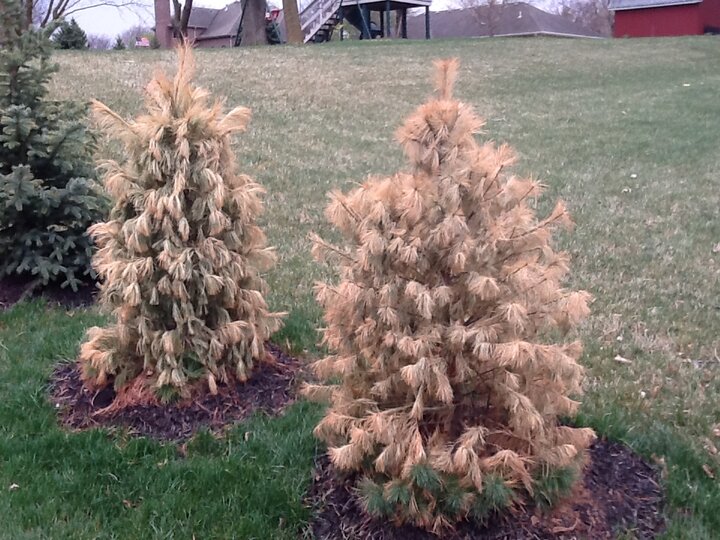
Winter desiccation occurs when the leaf and stem tissues lose more moisture faster than what the roots can absorb. These tissues are part of the permanent structure of a tree, shrub, perennial or ground cover. It is often caused by extended periods of extreme winds and cold temperatures.
Nebraska Facts
Nebraska Climate
Nebraska has a continental climate, which means extreme temperature range, and minimal winter precipitation. The coldest month is typically January but extreme minimum temperatures can occur anytime.
Nebraska Mean Minimum Temperature (1991-2020)
| Degrees Fahrenheit | December | January | February |
| Omaha (East) | 20 | 15 | 19 |
| Lincoln (East) | 18 | 14 | 18 |
| Kearney (Central) | 17 | 14 | 16 |
| Valentine (North) | 13 | 11 | 14 |
| Scottsbluff (West) | 14 | 15 | 17 |
Preventative Actions
Preventative Actions
Preventing winter desiccation is much easier than correcting it.
- Identify desiccation prone plants in your landscape. Common specimens in Nebraska are arborvitae, spruce, white pine, euonymus, juniper, holly, yews and boxwood
- Apply anti-desiccant products to plants with a history of damage. Usually three applications are recommended, spaced 6-7 weeks apart beginning in late fall, like Thanksgiving, Christmas and Valentine’s Day. Apply products to runoff when temps are above freezing. Apply products according to their product label.
- Water soil around plants thoroughly in late fall and throughout the winter when temperatures are above 40 degrees. Use a soaker hose to apply water slowly and allow it to soak in before temperatures drop below freezing.
- Install burlap wind screens between the plants and the prevailing winds. Evaluate the plants’ value in the landscape. Consider a different location in the landscape or possible replacement with other plant material.
For recommendations of trees and shrubs in Nebraska growing conditions, Plant Nebraska State has two publications: “Trees for Eastern Nebraska” and “Trees for Western Nebraska" found on their website here.
Nebraska Stats
Typical Symptoms
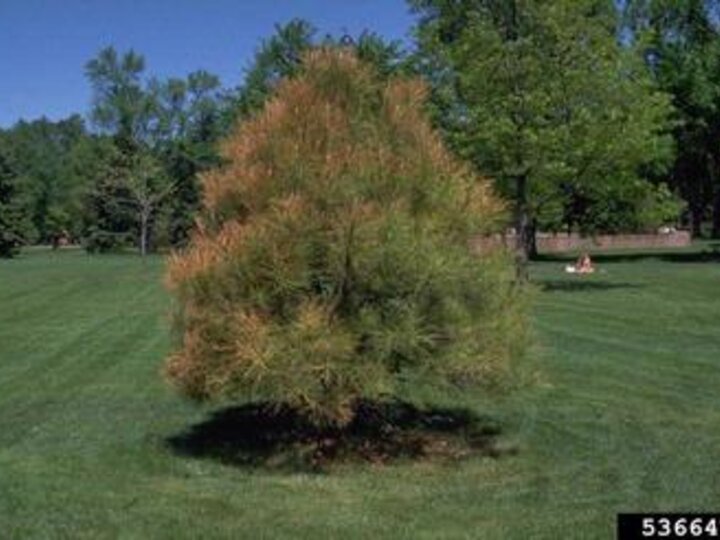
Winter desiccation on pine.
Photo by: William Jacobi, Colorado State University, Bugwood.org
Typical Symptoms
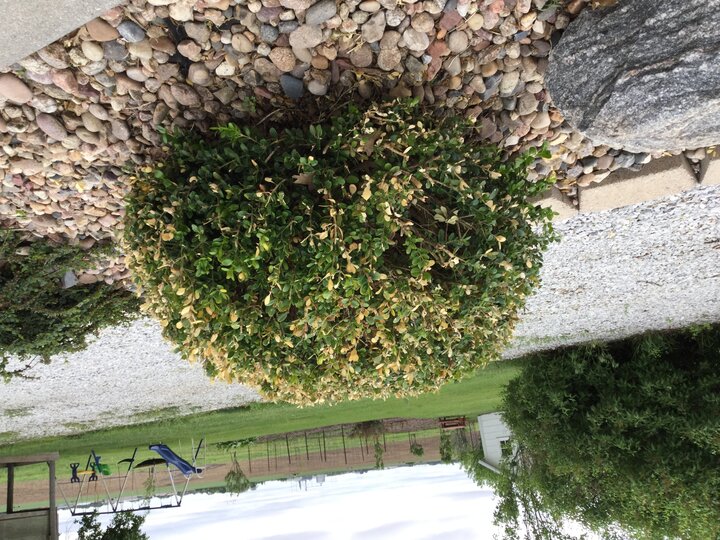
Winter injury on a boxwood causes browning.
Typical Symptoms
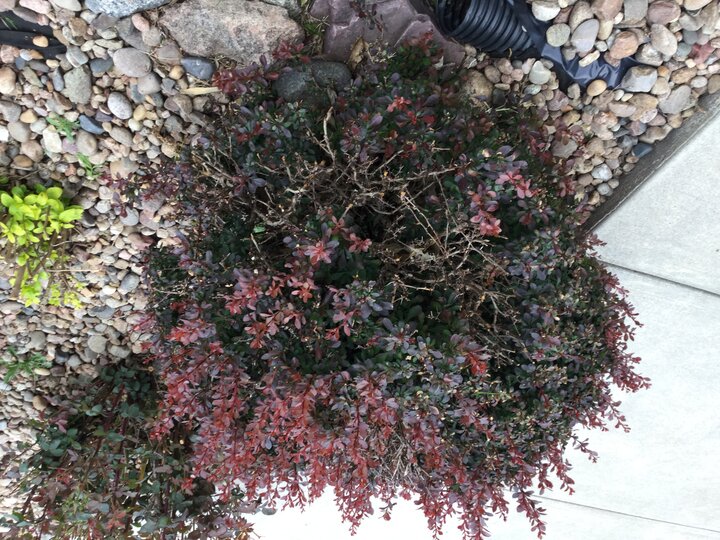
Dead patches in a barberry from winter desiccation.
Corrective Actions
Corrective Actions
Recovery from desiccation is difficult and may take some time.
- Examine bark, buds, stems to determine if tissues are dried out. Prune out desiccated and dried out portions of the tree/shrub.
- Keep soil moist, not soggy or dry in spring, summer and fall following injury.
- Avoid fertilization in first year after desiccation.
- Mulch with wood chips to avoid weed competition and to moderate soil temperature and moisture. Avoid placement of mulch next to the trunk to prevent suffocation and wildlife damage.
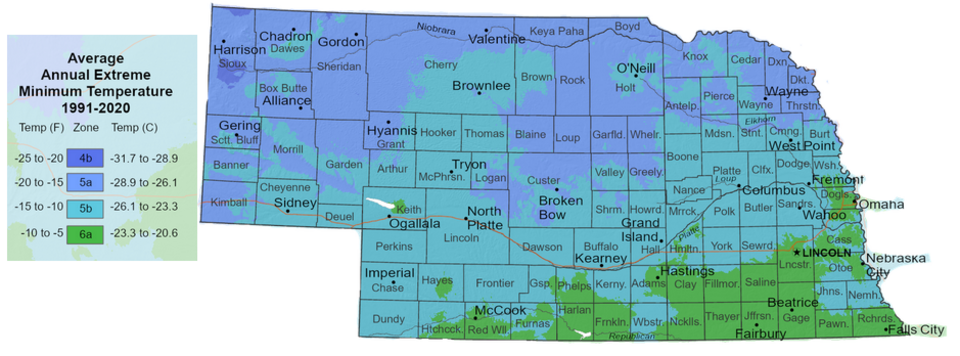
2023 USDA Plant Hardiness Zone Map for Nebraska
Winter desiccation can be reduced if plants from the proper hardiness zone are used for all landscapes.
Mapping by the PRISM Climate Group, College of Engineering, Oregon State University