Content
What is it?
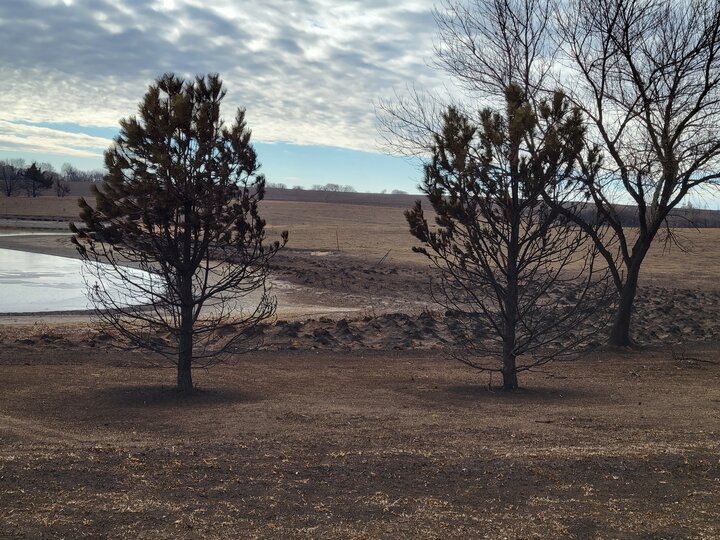
Fire Smart Landscaping is creating a defensible space, planning ahead for a fire event, and management of the surrounding landscapes to decrease potential fire damage.
Fires can rapidly spread with dry conditions and fuel sources. Strategically planted plants and maintained green areas can help to resist the spread of wildfire through your landscape and to your home.
Preventative Actions
Plant Spacing Guidelines
Provide vertical and horizontal space between shrubs and trees. Also leave space between plant groupings.
Horizontal Spacing
Horizontal spacing between plants depends on how steep the slope is and the size of the plant.
Flat to Gently Sloping 0-20% | Moderately Steep 21-40% | Very Steep +40% | |
Grass Dry grass and weeds | 30 feet | 100 feet | 100 feet |
Shrubs & Woodland Sagebrush, yucca, small red cedar | 100 feet | 200 feet | 200 feet |
Trees Forest trees such as pine or cedar | 100 feet | 100 feet | 200 feet |
Vertical Spacing
- Plants beneath large trees should be removed. This eliminates a vertical 'fire ladder'.
- Avoid mass planting shrubs at the base of trees.
- Leave space between plant groupings.
- Remove limbs 6-10' from the ground or make sure that there is 1/3 trunk to 2/3 canopy. (Not recommended for windbreaks.)
Nebraska Stats
Wildfire House Survival
Research proves that house survival during a wildfire is not random. It is how the house is built, the characteristics of the adjacent vegetation and other fuels, and routine maintenance that determines which homes burn and which homes survive. Pre-fire activities are critical actions that are completed before a wildfire occurs, which improve the survivability of people and the home.
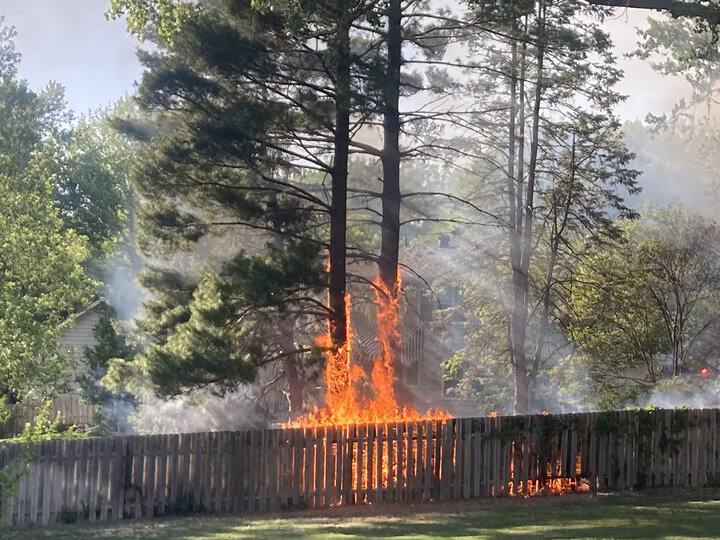
Wildfire Season in Nebraska
Historically in Nebraska, peak wildfire season begins in mid-February and lasts around 13 weeks.
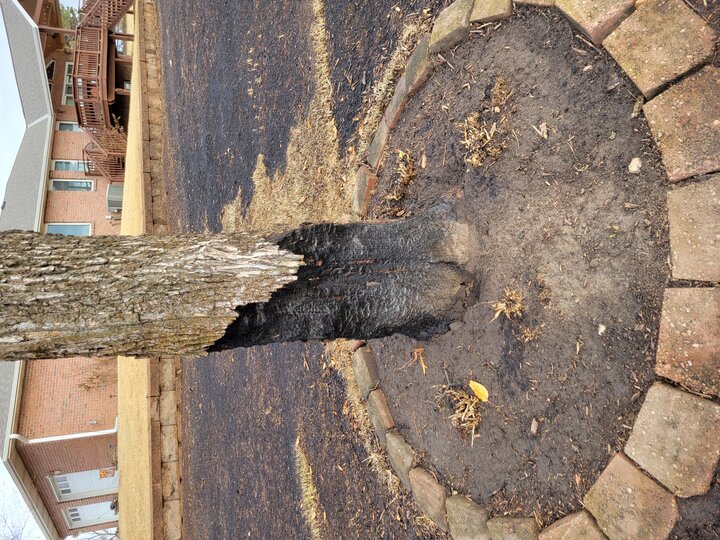
Wildfire Behavior
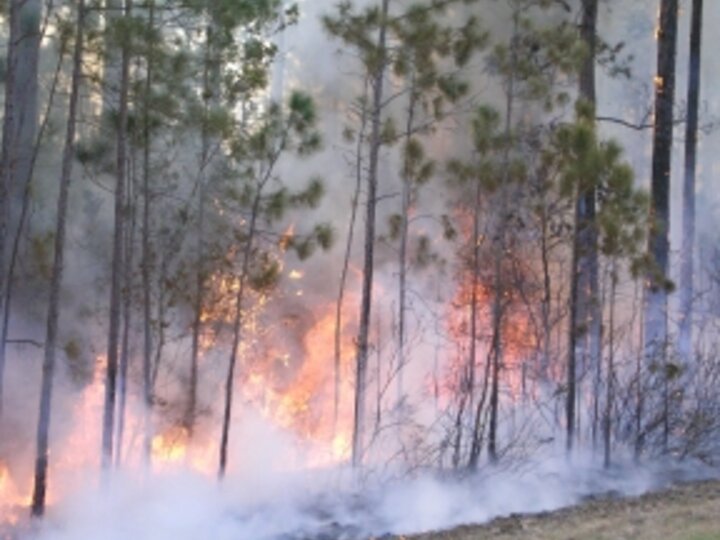
Three factors that influence wildfire behavior: Fuels, Weather, and Topography Fuels is the only factor that humans can impact.
Photo above is from Ken Masten, Georgia Forestry Commission, Bugwood.org
Corrective Actions
Defensible Space
There are three zones for a defensible space.
Zone 0
Ember Resistant Zone (0-5 feet from the House)
Objective: Create the most fire-resistant zone in the area immediately surrounding your home to avoid home ignition from blowing embers.
Greatest hazard: Plants against the house and near doors and windows.
Plant and Use: Sparsely planted, low-growing, non-woody, herbaceous plants less than 18" tall Non-combustible materials like concrete, brick, pavers, gravel
Avoid:
- Climbing plants
- Branches within 10' of chimney
- Litter in roof gutters
- Combustible items near the house or under the deck like trash containers, mulch, fencing, furniture, firewood
- Combustible landscape items attached to the house like fences, arbors, & trellises
Zone 1
Lean, Clean, & Green Zone (5-30 feet from the house)
Objective: Reduce heat and movement of flame by creating a 'lean and clean' environment.
Plant and Use:
- Low-growing, well-irrigated plants
- Use non-combustible materials for walkways
- Break up mulched areas into several smaller mulched beds
- Move firewood, lumber, other flammable items out of zone 1
- Allow ample spacing between plants
- Management is critical: Cut back woody and twiggy overgrowth, prune out dead plant material, and remove potential fuel sources like dead grass, dried stems, or dead leaves
Zone 2
Reduce Fuel Zone (30 feet from the house to the edge of the property)
Objective: Decrease energy and speed of a fire by eliminating continuous, dense vegetation both vertically and horizontally.
Often a transition zone between managed and fringe areas.
Plant and Use:
- Plants farthest away from the house may not need to be irrigated
- Wood mulch can be used in this zone
- Allow for ample spacing between plants
- Coordinate with neighbors on roads and water sources for fire vehicles and property line management
Plant Selection:
All plants burn. Plants that are more resistant to fire do not readily ignite from a flame and have decreased flammability.
Characteristics of plants with decreased flammability include:
- Low oil or resin content
- High moisture content
- Compact growth forms and green stems
- Drought tolerant