Content
What is it?

When there are warm winter temperatures, plants often break dormancy sooner than they should. They will “break bud” and begin to grow during the warm temperatures only to have the temperatures drop to seasonal levels soon afterwards. This can cause tissue damage to the newly emerged plant tissue.
Typical Damage
Nebraska Temperature Data
Abnormal Temperatures
Average Maximum Temperature over 3 Consective Days (since 2000)
Frequency | Greater than 65 degrees in February | Greater than 75 degrees in March |
Omaha (East) | 9 | 19 |
Lincoln (East) | 18 | 26 |
Kearney (Central) | 11 | 16 |
Valentine (North) | 11 | 11 |
Scottsbluff (West) | 13 | 17 |
Average Maximum Temperature
Normal (1991-2020)
Frequency | February | March |
Omaha (East) | 39 | 52 |
Lincoln (East) | 41 | 54 |
Kearney (Central) | 10 | 51 |
Valentine (North) | 41 | 51 |
Scottsbluff (West) | 45 | 54 |
Preventative Actions
Preventative Actions
Preventing Dormancy Breaks is much easier than correcting it.
- Identify plants prone to breaking bud too soon and avoid placing them in locations in your landscape that might speed up dormancy breaks, like near a brick facade on the south side of a house or near concrete.
- Plant in proper hardiness zones. Plant trees, shrubs, groundcovers, perennials, and ornamental grasses that are adapted to USDA hardiness Zone 6 in southern Nebraska; Zone 5 in northern Nebraska.
- Pay attention to the weather forecast. Long stretches of unseasonably warm temperatures can cause some plants to break dormancy too soon.
- Mulching perennial plant material in the winter (mid to late November) with wood mulch, leaves, or straw will help to protect the plants from the temperature fluctuations and keep a more consistent temperature.
- Water soils around plants thoroughly in late fall so that they enter winter moist, not soggy or dry. Avoid fall fertilization of shrubs, roses, groundcovers and perennials.
Nebraska Stats
Typical Damage from Dormancy Breaks
New tree buds like the one pictured are the most susceptible to damage resulting from dormancy breaks.
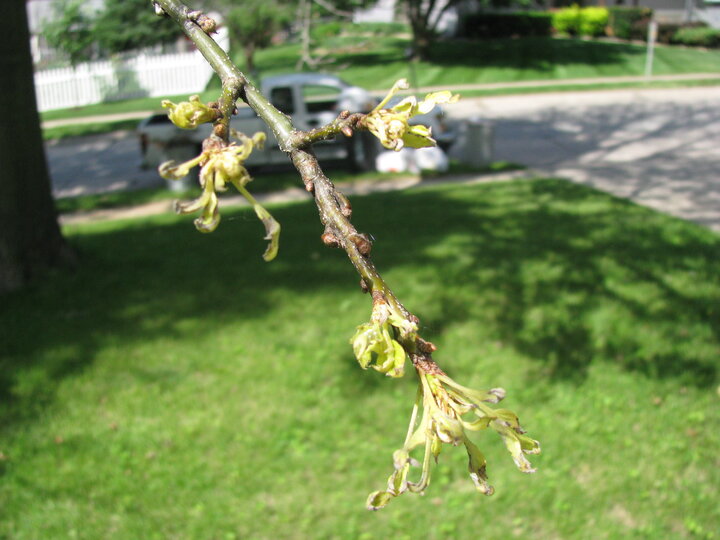
Typical Damage from Dormancy Breaks
Tissue death on ornamental plants is common in dormancy breaks.

Typical Damage from Dormancy Breaks
Withering of new tree buds also occurs from dormancy breaks.

Corrective Actions
Corrective Actions
Recovery is difficult and may take some time.
- Allow frosted leaves and blooms to fall off the plant naturally, then rake them up and compost them.
- Cut off blackened stems with a bypass hand pruner just above a node or growing point.
- Avoid fertilization until the plant recovers. Early summer will be appropriate in most situations.Keep soils around the plant evenly moist, not soggy or dry, for the growing season.
- Mulch with wood chips to avoid weed competition and to moderate soil temperature and moisture. Avoid placement of mulch next to the trunk to prevent suffocation and wildlife damage.