Content
What is it?
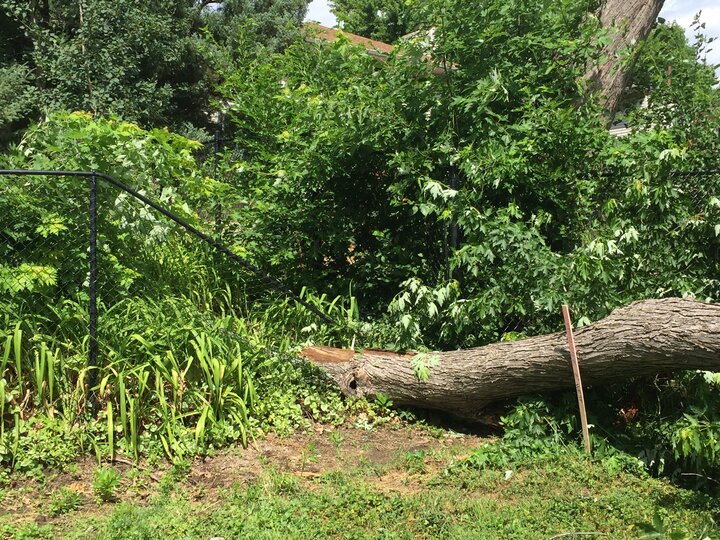
Thunderstorms, tornadoes and severe wind storms are a common occurrence on the Plains causing damage to plants, trees, and structures. Storms can uproot trees, cause plant material to fall on other plant material, break or crack branches, etc. which reduce the lifespan, pest susceptibility, and vigor of the plant.
Preventative Actions
Preventative Actions
Inspect and maintain your plants to lessen storm damage.
- Prune trees correctly when young (from 3 to 4 years after planting up to 10 to 15 years of age) so tree develops a strong branching pattern.
- Do not treat wounds with pruning paint or wound dressings.
- Remove any dead, damaged, or diseased tree branches as you see them at the branch collar. Do not leave stubs.
- Plant trees, shrubs, groundcovers, perennials and ornamental grasses that are adapted to USDA hardiness Zone 6 in southern Nebraska; Zone 5 in northern Nebraska.
- Identify brittle or easily damaged plant material like willow, cottonwood which are more prone to damage from wind or tornado.
- Select and plant trees with dense wood and strong branch angles that are less susceptible to breakage, consider slower growing trees over very fast growing trees.
- Inspect root ball of trees before purchasing. Avoid trees with pot bound roots and encircling or girdling roots.
- Do not allow codominant trunks to develop on shade trees.
- Do not plant too deep. Trunk taper needs to be visible above ground.
- Stake correctly: low on tree and for only one year. Use strong but flexible material.
- Monitor tree for signs of decay: fungal growth on bark, discolored wood, and large wounds.
Nebraska Stats
Typical Damage
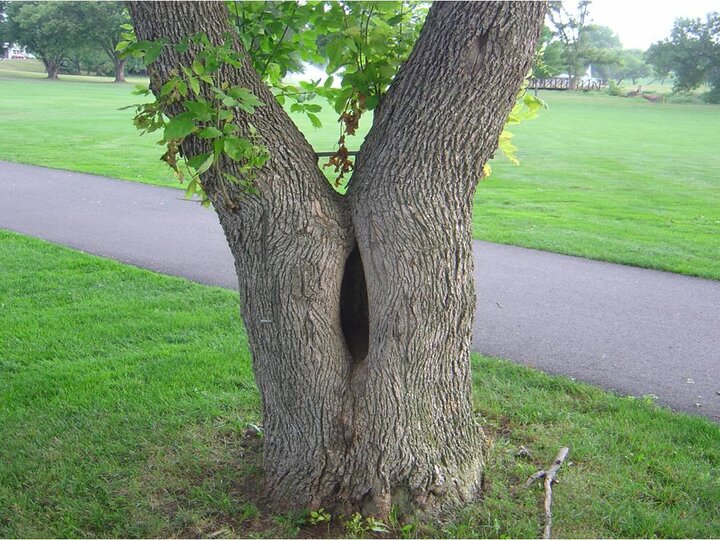
Trees with multiple leaders or narrow branching angles are more prone to significant wind damage. Broken or cracked branches increase risk of breakage in future events, while branch stubs left in trees will rot and decay.
Photo above is from John Fech, Nebraska Extension
Storm Events in Nebraska
Nebraska averages 15 storm events with wind gusts greater than 75 mph, per year (2010-2024 source: Storm Prediction Center).
Tornadoes in Nebraska
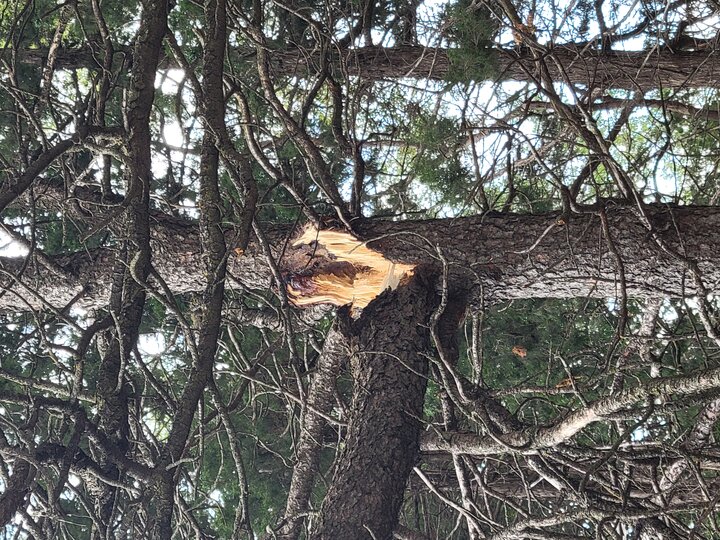
Nebraska averages 44 tornado storm reports annually (source: Storm Prediction Center).
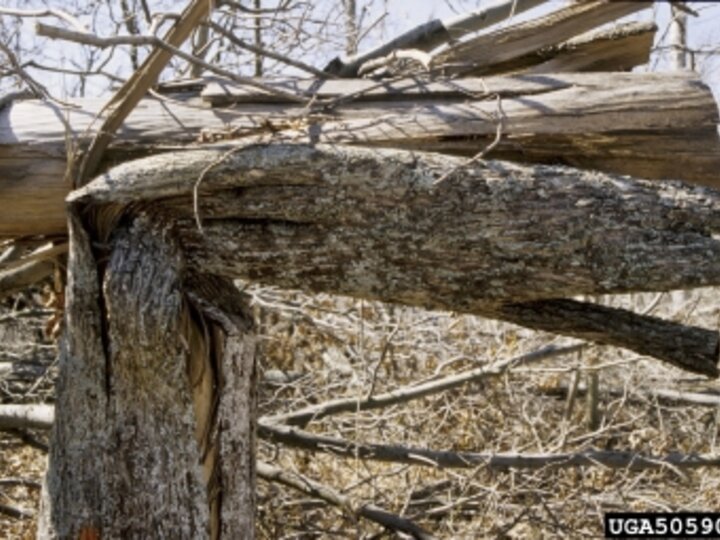
Photo above is from Joseph OBrien, USDA Forest Service, Bugwood.org
Corrective Actions
Corrective Actions
Use safety and patience when assessing damage.
- Remove any dead or damaged branches if you can do so safely. Consult an arborist for more extensive pruning or tree removal. Remove branches at branch collar. Stubs should not be left.
- Allow leaves and blooms to fall off the plant naturally, then rake them up and compost them.
- Cut off broken or bent stems with a by-pass hand pruner just above a node.
- Remove trees that have been uprooted, have trunk failure or more than 50% of branches are broken.
- Small trees that bent over or leaning my be staked into an upright position. Larger trees may best be removed for safety.
- Avoid fertilization until the plant recovers.
- Keep soils around the plant evenly moist, not soggy or dry.
- Mulch with wood chips to avoid weed competition and to moderate soil temperature and moisture.
- Be patient. It could take several years before some plant species show signs of damage.