Content
What is it?
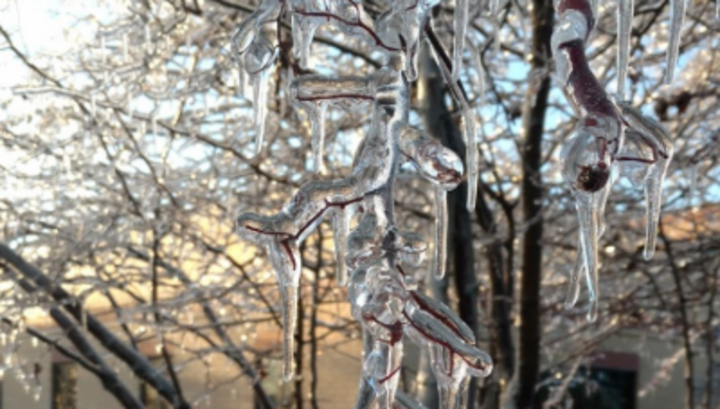
Ice typically forms on surfaces when liquid precipitation fall on surfaces that have temperatures below 32°F. This requires warm air higher in the atmosphere to melt ice particles before falling to the freezing surface. The greater the thickness of ice and wind speed will increase the potential for damage.
Preventative Actions
-
 Prune trees correctly when young.Joseph OBrien, USDA Forest Service, Bugwood.org
 -
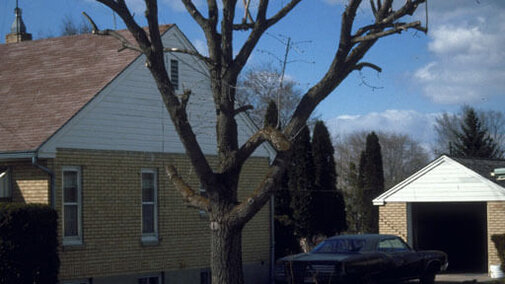 Avoid topping trees, like what is shown here. Follow recommended pruning practices.Fred Baker, Utah State University, Bugwood.org
 -
 Plant trees, shrubs, groundcovers, perennials and ornamental grasses that are adapted to USDA hardiness Zone 6 in southern Nebraska; Zone 5 in northern Nebraska.John Fech, Nebraska Extension Educator
Preventative Actions
Preventative Actions
There are many ways to prevent damage from ice.
- Prune trees correctly when young (from 3 to 4 years after planting up to 10 to 15 years of age) so tree develops a strong branching pattern.
- Follow recommended pruning practices. Avoid topping, rounding off, or pollarding pruning on trees as these result in weakly attached sucker branches.
- Remove any dead, damaged, or diseased tree branches as you see them at the branch collar. Do not leave stubs.
- Plant trees, shrubs, groundcovers, perennials and ornamental grasses that are adapted to USDA hardiness Zone 6 in southern Nebraska; Zone 5 in northern Nebraska.
- Select and plant trees with dense wood and strong branch angles that are less susceptible to breakage. Consider slower growing trees over very fast growing trees.
- Do not allow codominant trunks to develop on shade trees.
- Avoid staking trees too high on the trunk and for longer than one year. Staking material should be strong, but flexible to allow tree movement.
- Monitor trees for signs of decay (fungal growth on bark, discolored wood, large wounds).
Nebraska Stats
Severe Ice Storms in Nebraska
About 1 Day with Severe Storms Occurs Annually in Nebraska. (Source: National Centers for Environmental Information)

Freezing Rain Averages in Nebraska per Year (1948-2000)
4 Days in Eastern Nebraska, 1 Day in Western Nebraska
6-9 Hours in Eastern Nebraska, 0-3 Hours in Western Nebraska
(Source: Midwest Regional Climate Center)
Typical Damage
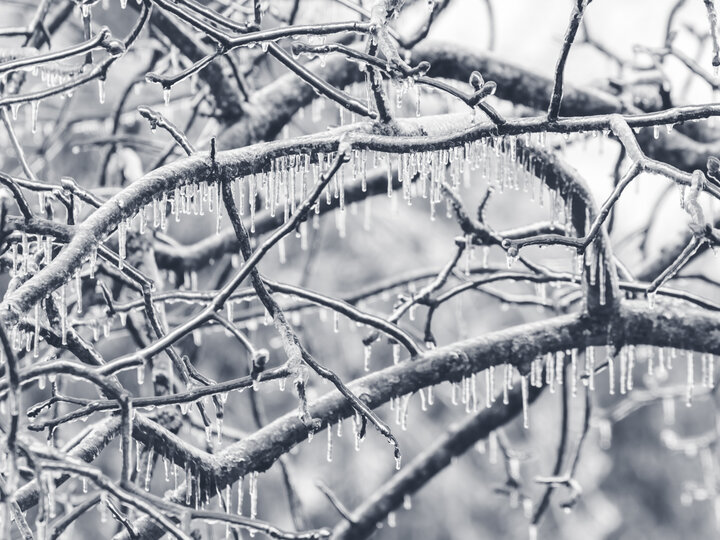
Ice that gathers on branches, stems, and crowns can cause problems. The amount of ice, the temperature, and the wind all play a role in the extent of the damage.
Corrective Actions
Corrective Actions
Don't overreact when ice covers your plants.
- Utilize sand or deicing agents when hard surfaces become unsafe to walk on. Select products that don’t harm nearby plant material.
- Do not stand under trees covered with ice. Falling ice is a hazard.
- Avoid walking across ice covered turf.
- Wait for the ice to melt off naturally, do not hit branches to remove ice.
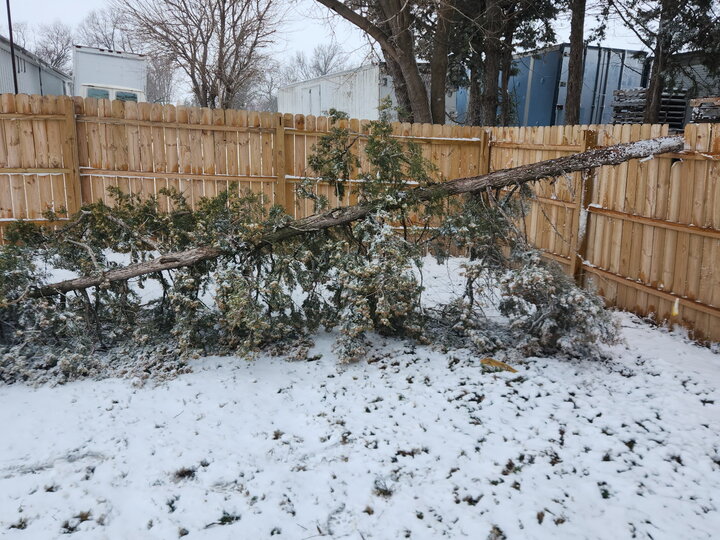
- After the ice has melted, do corrective pruning of broken branches if it is safe to do so from the ground or hire an arborist. Remove branches at branch collar. Stubs should not be left.
- Remove trees that have been uprooted, have trunk failure or more than 50% of branches are broken.
- Avoid fertilization until the plant recovers
- Keep soils around the plant evenly moist, not soggy or dry.
- Mulch with wood chips to avoid weed competition and to moderate soil temperature and moisture.