Content
Seasonal information for Nebraska's green industry professionals.
Going In-depth
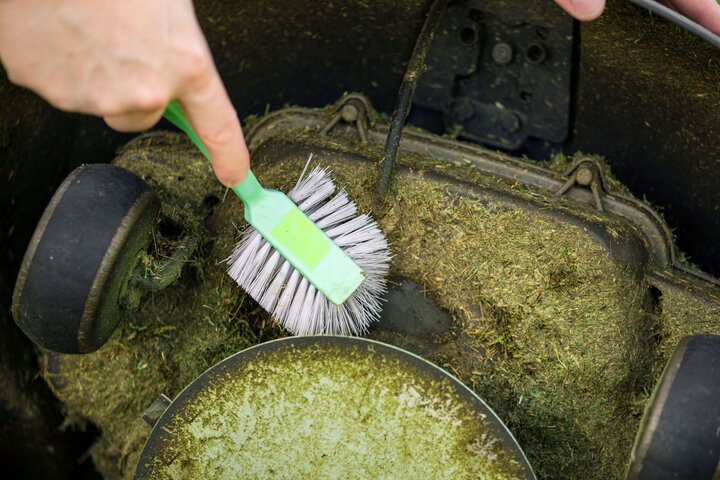
1. Mower and Garden Tool Cleanup - Clean up and prepare lawnmowers and tools for winter storage so they are ready to go next spring.
2. November 26th growing degree days (GDD) - Several Nebraska sites below, Understanding Growing Degree Days
3. Pest update - Based on growing degree day (GDD) markers, the pest control season is at an end. Watch for the return of GDD pest target timing in March 2026.
Research You Can Use
4. Make Good Impressions to Clients, Study Finds
Greener Landscapes - Conservation & Climate Change Mitigation in Action
5. Winter Mulch
Timely Topics
6. Use of Ice Melt Products
7. Avoid Traffic on Frozen Turf
8. Protect Young Trees from Wildlife Damage
9. Using Anti-desiccant Products
For Your Information
10. Commercial/Non-commercial pesticide applicator certification - Obtaining a new license or updating an expired license.
11. Digital Diagnostic Network - Need help with diagnostics? - Submit pictures and questions for diagnosis by Nebraska Extension experts.
ProHort Update Newsletter
ProHort Update is a FREE monthly e-mail newsletter from Nebraska Extension, providing timely information to green industry professionals.
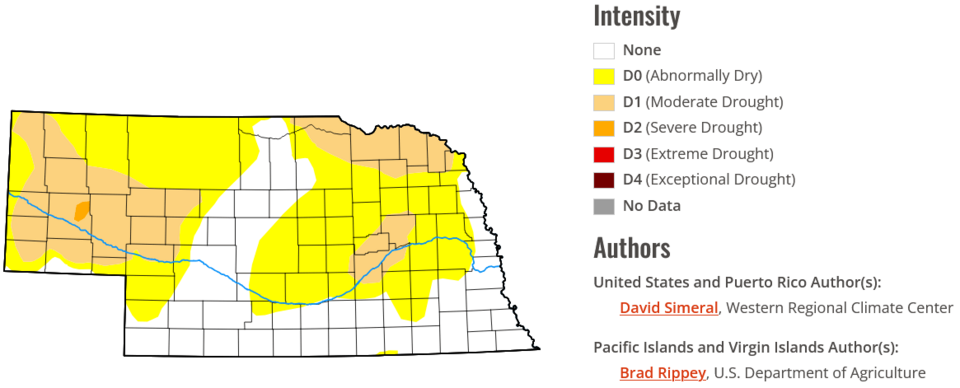
SubscribeNebraska's drought status, 11/26/2025
ProHort Update Body 10/2024
Upcoming Events
1. Mower and Garden Tool Cleanup
Garden tools are important – they make the job easier, and they’re not inexpensive. If you’ve been taking care of client’s properties for a while, or working in the shop on a variety of landscape equipment, you’ve probably accumulated a collection of several important pieces. Now that most of your lawn and landscape activities have been completed for the year, it is a good time to clean equipment before winter storage. A few minutes of care will pay dividends.
Cleaning Garden Tools
No matter the tool – shovel, pruners, hoe, trowel, rake – start by cleaning with a screwdriver or putty knife to scrape off the dirt, then wipe with a rag. It doesn’t need to be scrubbed super clean; you’re not going to eat off of it. The goal is just to get the dirt clods and dust off.
Maintain Tool Condition
Once the cleaning is accomplished, take a little more time to sharpen them. This usually involves placing the tool in a bench vise and using a file to return the cutting edge to the factory angle and take out any pits or dents.
Rust often develops on metal tools. After all, as gardeners, we usually apply water to help plants to grow, and the tools are usually nearby and get watered accidentally along with the plants. Remove the rust with fine sandpaper or steel wool, then wipe the surface with a rag to remove the oxidized particles and the sandpaper or steel wool grit.
Finish the job by coating surfaces with vegetable or motor oil and hanging them in an easily accessible area. The wooden handles can be lightly sanded and oiled with linseed oil to prevent or reduce cracking and extend the life of the tool.
Lawnmower Maintenance
Once you are done mowing for the season, it is a good practice to clean it up and service it in the late fall to be prepared for spring mowing and to avoid the long line at the shop if anything needs repaired. One of the first practices is to disconnect the spark plug and examine the contacts. They should be smooth and shiny. Rusty connections can prevent starting or result in misfiring. It’s possible to take some emery cloth or a wire brush and clean off the contact points but considering the low price of a new one and how much lawnmowers are used in this business, it may be better to simply replace it, especially if it’s been more than a few years since it was switched out.
Next, examine the undercarriage. If rust is starting, remove it with a putty knife and a stiff steel brush. Once clean, repaint the surface with a rust-resistant paint and allow to dry. Sharpen or replace lawnmower blades now. The cutting edge should be sharp enough to cut a piece of paper cleanly. If not, put it in a bench vise and use a file to sharpen it. Strive for a 30 degree angle.
Drain the engine oil. Discard the engine oil, discard according to local regulations and refill with the type and grade recommended in the owner’s manual.
The gasoline tank should be empty for winter storage, if not, drain the gasoline and discard. Gasoline can separate and become gummy during the winter. Replace with fresh gas in the spring.
The final step is to check loose bolts, wheels, nuts and other connections. It’s useful to give the mower thorough cleaning on all surfaces as well. When all of these steps have been accomplished, reconnect the spark plug and try out the refurbished machine.
2. November 26th growing degree days (GDD)
| Location | Accumulated Growing Degree Days |
| Grand Island, NE - Airport | 3721 |
| Lincoln, NE - Airport | 3970 |
| Omaha, NE - Airport | 4048 |
| Norfolk, NE - Airport | 3454 |
| North Platte, NE - Airport | 3177 |
| Scottsbluff, NE - Airport | 3163 |
4. Make Good Impressions to Clients, Study Finds
Whether it’s meeting with a new client to sell them turf and tree services, apply for a job or even meet with your new boss, their opinion of you matters – and it’s formed quickly. Some of the most important influencers in terms of making a good first impression are being confident, making eye contact, smiling and avoiding interruptions. Interestingly, smelling nice was also found to be a positive factor, as well as having body odor or bad breath leaving a negative impression.
Read this article for more information
5. Winter Mulch
Organic mulch, when properly applied, can provide a lot of great benefits to our plants, including:
- Moisture retention - Moisture loss is reduced with the cover of mulch and as mulch breaks down it increases organic matter in the soil which increases the water-holding capacity of some soils. Because of this, mulch also helps to slow down runoff and reduce the damage caused by pollutants running into sewers and surface water through stormwater runoff.
- Improved soil structure - Nutrients and organic matter are released into the soil as the mulch breaks down leading to better soil nutrients and reduced soil compaction.
- Weed control - Weed seed germination is slowed by mulch reducing the availability of light to the soil surface.
- Reduced weed trimmer or lawn mower blight - Adding mulch around plants creates space between tree trunks and shrub stems and the grass or weeds around them. If grass and weeds grow up around a tree or shrub, people are inclined to mow them down, often at the expense of the tree or shrub. Equipment injury from mowers and string trimmers, hitting and injuring tree or shrub bark, is very common and can be quite damaging.
- Moderates soil temperature - Mulch helps to keep the roots cool in the summer and maintains uniform cold soil temperature in the winter. Freezing and thawing of the soil can be harmful to plants. Organic mulch also doesn’t reflect heat back on to the plant like inorganic mulches do in some situations.
- Mimics forest conditions – Mulch on the ground around trees and shrubs mimics conditions that occur naturally in the forest. This helps plants grow better like they would in nature.
Now would be a good time to go out and refresh the mulch around trees and shrubs to help with moisture retention and uniform soil temperatures as we move into the fall and winter.
Using Mulch Correctly
Mulch should be kept at 3-4 inch maximum depth. It should always be spread out to a uniform depth around the tree, flat like a pancake. In some areas you may see very deep layers of mulch or what we refer to as the mulch volcano, where mulch is piled around trees to look like a volcano, but this is not advised. Mulching too deeply leads to shallow rooting, roots can develop in the deep mulch layers, and it can disrupt the flow of water to the soil. Mulch should be placed at least a few feet around the tree, if you can go out further that is better for the tree. Mulching to the dripline is the preferred width for mulch, but isn’t always feasible.
As a reminder, it is not advised to use weed barriers or fabric mats underneath organic mulch. These can disrupt the flow of water to plant roots and weeds can germinate through them or on top of them, so it doesn’t work well for what it is sold to do. Also, it is difficult to make changes to a landscape once landscape fabric is in place.
Mulching the Landscape from Nebraska Extension
6. Use of Ice Melt Products
Use ice melt products sparingly to avoid damage to turf, groundcovers, perennials and trees near paths. Consider applications of sand in some areas to help park users, shopping mall customers and other clients gain traction when concrete is icy. Calcium magnesium acetate, though pricey, usually causes less damage to plants than sodium chloride. Calcium chloride is another option.
Ice Melters in the Landscape from Nebraska Extension
7. Avoid Traffic on Frozen Turf
Avoid traffic across dormant turf if possible. Crowns can be crushed when weight is applied, resulting in desiccation, moisture loss and rough looking turf in spring.
Avoid Traffic on Frozen Turf from Nebraska Extension
8. Protect Young Trees from Wildlife Damage
Protect young trees from critter damage with hardware cloth or pvc collar installation. When dealing with large numbers of trees, prioritize which are most valuable and worthy of protection.
9. Using Anti-desiccant Products
Balance anti-desiccant applications to broadleaf evergreens such as boxwood, holly, azalea and arborvitae with the possible reduction in winter photosynthesis and respiration. Again, it’s a matter of plant importance and client satisfaction.
Anti-Transpirants Help Prevent Winter Drying Damage from Nebraska Extension
10. Commercial/Non-commercial pesticide applicators
The 2026 training and recertification period will begin January 1, 2026. Until then, you can still certify for a new commercial or noncommercial applicator license by exam.
Registration for 2026 in-person training sessions will open in mid-December 2025. In-person training sessions for initial certification consist of video reviews of our study manuals, plus an opportunity to take your certification exams.
Testing-only Options
- Closed-book exams are given by the Nebraska Department of Agriculture (NDA). Preregistration is not required and there is no cost. Visit the link below for a list of available test-only dates, times and locations - https://pested.unl.edu/.
- NDA computer-based testing is provided through the Pearson-Vue company. Click here for a list of testing sites, categories available, dates, and registration information. Cost $55 per exam. (For applicators with multiple categories on their license, each category is charged the full testing fee.)
2026 Commercial/non-commercial training will be held January through April. Training schedules are available at https://pested.unl.edu/. Help your employees be successful at getting a license by purchasing study materials.
11. Digital Diagnostic Network - Need help with diagnostics?
Do you or your clients have questions you need help answering? Maybe you are a lawn care person and they're asking about trees, shrubs, or flowers? While you can refer them to their local Extension office, another option is Digital Diagnostic Network. Homeowners, lawn care professionals, pest control operators and others are invited to submit questions and photos through this website or with the assistance from an Extension professional at any Nebraska Extension office. All offices are equipped with high-resolution digital image capturing technology. Whether the question is about a lawn weed, insects on a plant, diseases in a shrub border or other, an expert panel of Extension professionals will review and respond to the question. To get started, create an account so the question can be reviewed and responded to via email. For more information and to create an account, go to Digital Diagnostic Network.
Bugging Out With Your Camera Phone - Tips on how to get a good picture.
Reference to commercial products or trade names is made with the understanding that no discrimination is intended and no endorsement by Nebraska Extension is implied. Use of commercial and trade names does not imply approval or constitute endorsement by Nebraskas Extension. Nor does it imply discrimination against other similar products.
Continuing Issues
Fruits & Vegetables
Trees & Shrubs
- Emerald Ash Borer Resources - EAB has been found in several Nebraska locations. Homeowners are encouraged to wait to begin treating their ash trees until the insect is confirmed within 15 miles of their location.
- NFS Tree Storm Damage Resources