Content
Seasonal information for Nebraska's green industry professionals.
Going In-depth
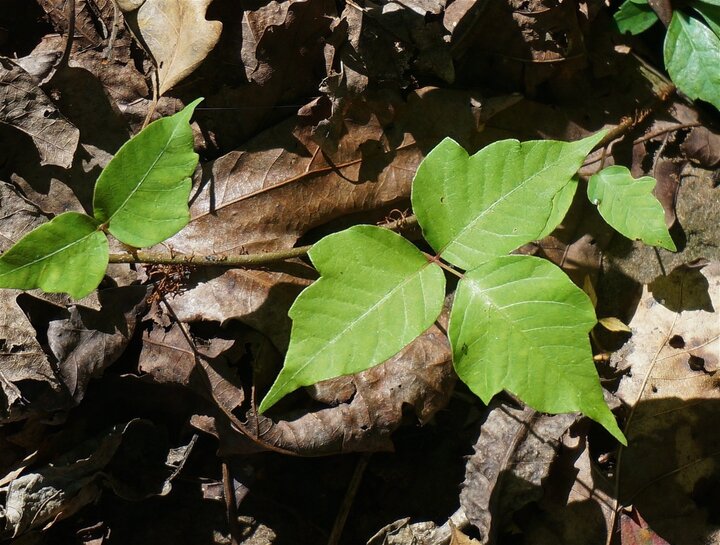
1. Don't Let Poison Ivy Keep You Indoors - We are outside more often in the spring and summer months. Protect yourself from Poison Ivy reactions.
2. June 1st growing degree days (GDD) - Several Nebraska sites below, Understanding Growing Degree Days
3. Pest update - Pests to watch for based on growing degree days (GDD)
Research You Can Use
4. Annual Eruption of "Mulch Volcanoes", The Ohio State University
Greener Landscapes - Conservation & Climate Change Mitigation in Action
5. Gall-y gee, What are These? - Oak Apple Galls
Timely Topics
6. Composting Grass Clippings
7. Bagworms
8. Storm Damage Cleanup
9. Japanese Beetles - Coming Soon
For Your Information
10. Commercial/Non-commercial pesticide applicator certification - Obtaining a new license or updating an expired license.
11. Digital Diagnostic Network - Need help with diagnostics? - Submit pictures and questions for diagnosis by Nebraska Extension experts.
ProHort Update Newsletter
ProHort Update is a FREE monthly e-mail newsletter from Nebraska Extension, providing timely information to green industry professionals.
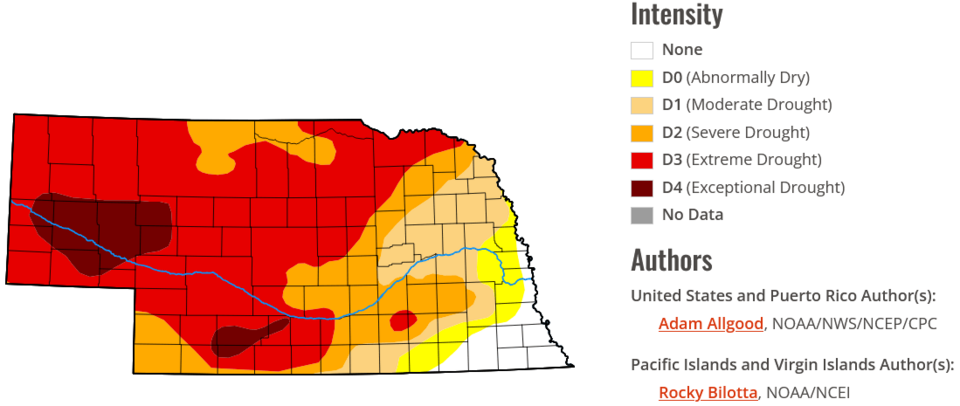
SubscribeNebraska's drought status, 5/28/2026
ProHort Update Body 10/2024
Upcoming Events
1. Don't Let Poison Ivy Keep You Indoors
What is poison ivy?
Poison ivy is a poisonous wild plant native to Nebraska and much of Mexico, Canada and the US. As with any species of the genus Toxicodendron, all parts of the plant contain a toxic oil called urushiol that causes an itchy, irritating and sometimes painful rash in most people who touch it. Eastern poison ivy (T. radicans) is more common in eastern Nebraska, while western poison ivy (T. rydbergii) grows throughout the state. Poison sumac (T. vernix) and poison oak (T. diversilobum and T. pubescens) are not found in Nebraska.
What does poison ivy rash look like on skin?
Sensitive people (approximately 70% of Americans) often develop allergic dermatitis within 4-48 hours of their skin coming in contact with the plant. This is typically characterized as a linear, itchy red rash that gradually blisters and weeps from clusters of pinprick-like bumps. Severity of the rash depends on how much urushiol was left on the skin, and areas with more of the oil may develop a rash sooner than other areas.
Safety Tips
While poison ivy can naturally be found growing in places where we live, work and play, there are effective ways to avoid that itchy red rash without staying inside. Consider the following safety precautions if you plan to spend time in an unmown or wild area.
- Cover up before you go. Wear long sleeves and pants, a hat, socks and shoes that cover your entire foot. This also plays into best practices for preventing skin cancer and bug bites. Dry, loosely woven fabrics are ideal for keeping the oil from reaching your skin. Alternatively, commercially available products such as poison ivy barrier creams or protection wipes can work as cover when applied as directed.
- Have a way to clean your skin immediately in case of exposure. Urushiol can be absorbed within 30 minutes of touching it, making quick clean-up important after suspected contact with the plant. This can be as simple as washing off at a nearby sink with soap and water. (No need for vigorous scrubbing, which can worsen exposure.) Keep a waterless poison ivy cleanser, such as IvyX wipes or a bottle of Tecnu and a towel, handy in your bag or vehicle for time in more remote areas.
- Do a quick scan for poison ivy before starting into an area. Look up, down and around as you move, since the plant can grow low as a groundcover, taller as a shrub or up a tree as a vine. This applies in the wintertime, too, since the oil remains in the leaves even after they fall off, as well as in the plant’s dormant woody stems. If you identify poison ivy up ahead, it’s probably best to turn around and go back the way you came. When handling vegetation, consider wearing gloves, tying back long hair and refraining from touching your face or eyes as a rule.
- Wash up afterward to remove any lingering urushiol. This can be an especially helpful habit for hikers, campers, gardeners and people who regularly work outside. Upon returning from the great outdoors, wash down your gear with soap or rubbing alcohol and water. Then do the same for your shoes, covering your hands with disposable gloves or plastic bags if needed. After that, change out of your clothes and send them straight to the laundry—wash with detergent in hot water separately from other clothes. Finally, take a normal shower (not a bath), avoiding complexion soaps with emollients or bath oils.
What does poison ivy look like?
Poison ivy as a plant takes on many different forms and has a few look-alikes. Because of this, it can be tricky to recognize. In open, sunny situations like a prairie or field, it tends to grow densely as a bushy shrub. In the woods, poison ivy take on a more relaxed habit, spreading in low patches along the ground or up a tree as a vine.
A key identification characteristic of poison ivy is the leaf, which is actually compound and made up of three leaflets 1-4 inches long. Hence the adage, “leaves of three, let it be.” Leaflets are variable in shape and size, even on the same plant, and can be smooth-edged, irregularly toothed or lobed—sometimes with a “thumb” that makes them look like pointed mittens. The new leaves of spring are often small, shiny and light green (even reddish or purplish) in color. Mature leaves are dark green, turning fiery red in autumn before falling away. Despite being deciduous, poison ivy vines can still be spotted in winter clinging to tree trunks by distinctive, intensely hairy woody stems.
Look-alike plants
Several plant species in Nebraska are often confused with poison ivy. Proper identification can be complicated by some of these plants growing interspersed with poison ivy in the wild, so observe closely! Here are the main ways to distinguish poison ivy from the rest.
- Virginia creeper is a woody vine. While young leaves sometimes have only three leaflets similar to poison ivy, mature leaves have five leaflets all connected at a single point.
- Boxelder is a tree that can look like poison ivy, especially as a seedling. However, any boxelder “leaves of three” are arranged oppositely along the stem rather than in an alternating pattern.
- Wild grape vines commonly grow in wild places as poison ivy does, but their leaves are not compound and grow singly along the stem.
- Fragrant sumac is a shrub in the same family as poison ivy with similar trifoliate leaves. Unlike poison ivy, none of its leaflets have stalks (petioles).
- Wild raspberry and blackberry are also shrubs with trifoliate leaves; these species can be distinguished from poison ivy because they have prickly stems, finely toothed leaf edges or both.
- Boston ivy is a vine that sometimes exhibits three-parted leaves; however, these are always young leaves—older leaves are three-lobed, but not separated like the leaflets of poison ivy.
Helpful Resources
How to treat an allergic reaction to poison ivy
How to control and remove poison ivy plants
Poison Ivy Identification Quiz
2. June 1st growing degree days (GDD)
| Location | Accumulated Growing Degree Days |
| Grand Island, NE - Airport | 751 |
| Lincoln, NE - Airport | 809 |
| Omaha, NE - Airport | 811 |
| Norfolk, NE - Airport | 607 |
| North Platte, NE - Airport | 515 |
| Scottsbluff, NE - Airport | 605 |
3. Pest Update
| GDD (base 50) | Insect | Lifestage present at this GDD |
|---|---|---|
| 325-350 | Lilac borer (peak adult emergence at 930, see below) | 1st adult emergence |
| 350-375 | Lesser peach tree borer | Adult flight |
| 350-500 | Oystershell scale | Peak adult emergence |
| 400-500 | Pine needle scale | 1st generation - hyaline stage (control target) |
| 400-500 | Emerald ash borer (peak adult emergence at 1000-2000, see below) | 1st adult emergence |
| 400-575 | Euonymous scale | 1st generation |
| 400-600 | Bronze birch borer | Adults, eggs, new larvae |
| 440-700 | Ash sawfly | 1st larvae appear |
| 575-710 | Greater peach tree borer | Adult emergence |
| 600-900 | Bagworm | Larvae appear |
| 850-900 | Mimosa webworm | 1st generation egg hatch |
| 850-900 | Fall webworm | Egg hatch |
| 930 | Lilac borer | 1st generation hyaline stage |
| 950-2150 | Japanese beetle | Adult emergence |
| 1000-2000 | Emerald ash borer | Peak adult emergence |
| 1200-1800 | Fall webworm | Caterpillars feeding |
| 1250 | Codling moth | 2nd generation control stage |
| 1375 | American plum borer | 2nd generation |
| 1500 | Pine needle scale | 2nd generation control stage |
| 1700 | Zimmerman pine moth | adult flight |
| 1800-2200 | Banded ash clearwing | adult emergence |
| 1850-2025 | Fall webworm | Tents become apparent |
| 1925-1950 | Magnolia scale | Egg hatch |
For a more complete list, visit Michigan State University GGD of Landscape Insects or GGD of Conifer Insects.
4. Annual Eruption of "Mulch Volcanoes", The Ohio State University
Mulch is an essential part of tree care. Organic mulches should be maintained at a uniform level of 2-3 inches deep around all trees. However, people sometimes end up putting too much mulch around trees, in some cases it is even piled up around the trunk of the tree like a volcano, which is bad for tree growth. In high mulch locations, three main issues develop with trees including adventitious root growth, an interference with oxygen to the roots, and the mulch compacting around tree roots. There are many other secondary issues that can develop from improper mulching. The Ohio State University has a great article that outlines the impacts of mulch volcanoes and how bad mulching practices can damage and kill trees.
Read more here.
5. Gall-y gee, What are These? - Oak Apple Galls
While doing some work around the yard, I came across the weirdest thing on the leaf of this red oak – a green bulbous growth on a leaf!
This weird structure is an oak apple gall, caused by a gall wasp. The gall itself is round and can sometimes turn red like an apple, hence the common name. These galls are found on oaks, and most commonly on red (Q. rubra), black (Q. velutina), and scarlet (Q. coccinea) oaks. There are more than 50 species of gall wasps in North America that produce oak apple galls. By looking at the appearance and specific location of galls, you can determine the species, but the lifecycles are all very similar across the gall-maker species.
The female gall wasps start the process of gall-making by depositing two things into a newly emerged oak leaf: an egg and gall-inducing chemicals. These chemicals mimic plant hormones and direct the plant to grow a structure on the leaf perfectly suited for the egg and subsequent larvae to grow.
Each gall forms around one egg, and provides protection for the egg to grow and specialized nutritive tissue to feed the larvae once it hatches. Once the wasp has grown enough to emerge and leave the gall, the gall will turn a brown color and become a husk. Thankfully, these galls can easily blend into the canopy of large trees and are most noticeable on small trees with canopies that fall in lines of sight.
Are they harmful?
No. The galls do not cause harm to the plant and are mostly just a curious part of nature. If you see a wasp emerging from the gall, don’t worry. This type of wasp doesn’t sting humans.
Control
Control of oak apple galls isn’t necessary and rather cumbersome to attempt. Systemic insecticides rarely give good control. Pruning out of the gall-infested branches can help reduce populations of the gall insects but aren’t recommended since the galls are harmless to the plant.
Gall wasps are naturally controlled by parasitoid wasps. These parasitoid wasps use the galls as places to deposit their own eggs or deposit their eggs on the developing larvae, which is used as a food source. The galls also provide winter habitat for other beneficial insects.
For More Information:
Oak "Apples" and the Gall-Making Process | BYGL
Plant Galls Caused by Insects and Mites | Oklahoma State University
6. Composting Grass Clippings
Grass clippings are in abundance with the recent rains across the state, and a great material to compost instead of dumping them in a pile and leaving them. By mixing them with leaves, wood chips, or other yard wastes, you can speed up the decomposition process and reduce the odor that comes off the annual pile of grass clippings.
But not all grass clippings should be composted. Grasses treated with herbicides may have residue on them even after the first watering in and mowing. Depending on the active ingredient, the residual activity can persist throughout the composting process and cause off-target injury to plants when the compost is applied. The most commonly cited herbicides that can remain active through composting include clopyralid and aminopyralid.
To reduce the risk of herbicide residue in compost, mulch or discard grass clippings for the next three mowings after an herbicide application is made on a lawn. Happy mowing and composting!
7. Bagworms
Bagworms started to emerge last week in the Omaha area. Now is the time to scout your evergreen trees and shrubs for activity. Low impact options would include BT (Bacillus thuringiensis) or spinosad. Small bagworms are able to move from tree to tree through ballooning - much like spiders do. Repeat applications (per label instructions) will help extend protection from new arrivals.
More information here.
Additional information here.
8. Storm Damage Cleanup
Many areas throughout Nebraska have been dealing with storms over the past couple of weeks. Branches were broken by tornadoes and strong winds, and many perennials and annual plants had damage from hail or wind. Some areas may have even had trouble with flash flooding.
Think safety first when approaching a storm-damaged landscape.
- Prune out dead and damaged branches.
- Remove trees with trunks that were split, bent over or uprooted.
- Water and mulch trees thoroughly, don’t fertilize.
For more information on dealing with storm damage, visit our Weather-Ready Landscapes Resources page.
9. Japanese Beetles - Coming Soon
Japanese beetle is an invasive insect, identified by their metallic green body, bronze-colored wing coverings, and white tufts of hair on their sides. These beetles will soon be out damaging many of our plants, with the adults feeding on over 300 species of plants. In Nebraska, adult Japanese beetles prefer lindens, roses, and many other plants in the rose family. Healthy plants are typically able to tolerate Japanese beetle damage, so continue to use best management practices vulnerable trees and shrubs. For management, work with your clientele to handpick or tap beetles into soapy water in the evenings. When needed, organic options include neem oil, Pyola, pyrethrins, and Bacillius thuringiensis (Btg)*; synthetic options include carbaryl, cyfluthrin and permethrin. Systemic insecticides, such as imidacloprid cannot be used on Lindens, in accordance with the label instructions. Pheromone traps are not advised for Japanese beetles because they work too well and will attract many more beetles than what were already found in a yard.
*Choose a Bt product specifically labeled for use on Japanese beetles (Btg). Other Bt products, such as Btk, is specific to caterpillars and will not be an effective treatment for beetles.
More information here
10. Commercial/Non-commercial pesticide applicators
If you have a pesticide applicators license which expired in April 2026 or you need to get a new license, testing options are listed below.
Testing-only Options
- Closed-book exams are given by the Nebraska Department of Agriculture (NDA). Preregistration is not required an there is no cost. Visit the link below for a list of available test-only dates, times and locations - https://pested.unl.edu/.
- NDA computer-based testing is provided through the Pearson-Vue company. Click here for a list of testing sites, categories available, dates, and registration information. Cost $55 per exam. (For applicators with multiple categories on their license, each category is charged the full testing fee.)
Commercial/noncommercial applicators are professionals who apply restricted-use pesticides for hire or compensation. Anyone who applies pesticides to the property of another person, either restricted- or general-use products, for control of pests in lawns, landscapes, buildings or homes must also have a commercial pesticide applicators license. Public employees (those employed by a town, county, state) applying mosquito control pesticides whether restricted- or general-use, must also hold a commercial or noncommercial certification.
11. Digital Diagnostic Network - Need help with diagnostics?
Do you or your clients have questions you need help answering? Maybe you are a lawn care person and they're asking about trees, shrubs, or flowers? While you can refer them to their local Extension office, another option is Digital Diagnostic Network. Homeowners, lawn care professionals, pest control operators and others are invited to submit questions and photos through this website or with the assistance from an Extension professional at any Nebraska Extension office. All offices are equipped with high-resolution digital image capturing technology. Whether the question is about a lawn weed, insects on a plant, diseases in a shrub border or other, an expert panel of Extension professionals will review and respond to the question. To get started, create an account so the question can be reviewed and responded to via email. For more information and to create an account, go to Digital Diagnostic Network.
Bugging Out With Your Camera Phone - Tips on how to get a good picture.
Reference to commercial products or trade names is made with the understanding that no discrimination is intended and no endorsement by Nebraska Extension is implied. Use of commercial and trade names does not imply approval or constitute endorsement by Nebraskas Extension. Nor does it imply discrimination against other similar products.
Continuing Issues
Fruits & Vegetables
Trees & Shrubs
- Emerald Ash Borer Resources - EAB has been found in several Nebraska locations. Homeowners are encouraged to wait to begin treating their ash trees until the insect is confirmed within 15 miles of their location.
- NFS Tree Storm Damage Resources