Content
Seasonal information for Nebraska's green industry professionals.
Going In-depth
1. Spray Equipment, Application Technique are Weather Essential - Pesticide applications may be necessary to keep turf healthy and pest free. Proper pesticide application is a multi-faceted endeavor with many components that influence the end result.
2. March 31st growing degree days (GDD) - Several Nebraska sites below, Understanding Growing Degree Days
3. Pest update - Pests to watch for based on growing degree days (GDD)
Research You Can Use
4. Boxwood Alternatives, Michigan State University
Greener Landscapes - Conservation & Climate Change Mitigation in Action
5. Conscientious Spring Gardening
Timely Topics
6. Watering the Lawn
7. Spring Weed Control
8. Mitigating Wildfire Hazard
9. Desiccation of Evergreens
For Your Information
10. Commercial/Non-commercial pesticide applicator certification - Obtaining a new license or updating an expired license.
11. Digital Diagnostic Network - Need help with diagnostics? - Submit pictures and questions for diagnosis by Nebraska Extension experts.
ProHort Update Newsletter
ProHort Update is a FREE monthly e-mail newsletter from Nebraska Extension, providing timely information to green industry professionals.
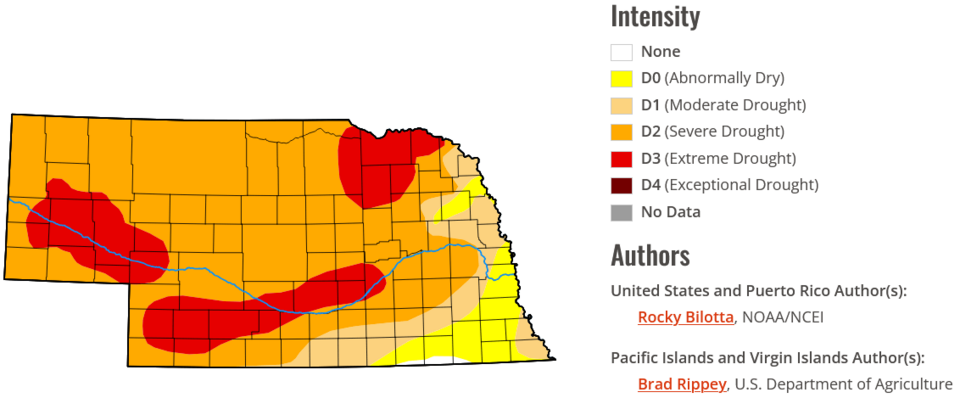
SubscribeNebraska's drought status, 3/26/2026
ProHort Update Body 10/2024
Upcoming Events
1. Spray Equipment, Application Technique and Weather are Essential
Turf health and performance in the landscape is heavily dependent on following good management practices such as proper mowing, fertilization, aeration, irrigation and cultivar selection. When these foundational operations fail to produce a pest free lawn, pesticide applications are often necessary. Proper pesticide application is a multi-faceted endeavor with many components that influence the end result.
All equipment options have pros and cons. Some of the factors to consider are access to a water source, weight of the unit, level of adjustability, ease in navigation through the landscape, cost of the unit and replacement parts, coverage capacity, nozzle options, droplet size range and the flexibility of calibration.
Because of concerns over spray drift, it’s important to consider the relationship between wind speed, coverage area and droplet size. For the most part, coverage – amount of the product in contact with the leaf surface of the plant after application - is greatest when droplet size is smallest, while drift – movement of the product away from the intended target – is also greatest when droplets are the smallest. In other words, very small droplets (fine) lead to great coverage, but great tendency for drift, while the opposite is true, where large (coarse) droplets often result in less than desirable coverage, but excellent drift reduction. This inverse relationship is also influenced by the ambient air movement (wind speed) present during the application. At high speeds, drift can occur no matter how small or large the droplets are.
Even though it may be counterintuitive to consider, the most desirable wind speed is not zero. While it’s extremely important to limit off-target movement of any pesticide, the most desirable range is actually 3-7 miles per hour. If spray applications are made when no air movement is present, the effects are similar to those when applications are made during a weather event called a temperature inversion, where warmer air is above ground level cooler air, causing the applied products to remain on plants longer than intended, usually resulting in phytotoxicity.
Several technologies are available to improve the accuracy of spray applications. These include spray controllers that adjust during ground speed variations, direct injection systems that use a precise meter at the orifice to apply needed volume, sprayer shields that cover the area to be applied and boom height control that can be adjusted for specific needs.
A high degree of accuracy of delivery and greater precision delivery result in more complete pest control and less outlay of resources. The common result of an efficient, accurate application is fewer call-backs to re-apply products after the first application was ineffective. Call-backs are expensive and greatly impact the bottom line of running any business.
Calibration is one of the most influential factors in accurate delivery. While there are many steps to be taken in calibration, the first one is the easiest and most inexpensive – simply fill the tank and watch the system run. While running or spraying, look for clogged nozzles, differences in output amongst orifices, leaks, coverage differences from side to side in the coverage pattern and the pressure required to operate the system. If the sprayer has not been calibrated in a few years, it’s common for any or all of these limitations to occur.
For a slightly more involved step, place a quart jar under each nozzle and let the system run to see if all the jars fill completely in the same amount of time. Devices such as flow meters can also be used for this purpose. Spray water over warm pavement, then wait a few minutes to watch it dry can help to illustrate uniformity of application. Areas that dry quickly are not receiving as much volume as those that stay wet for a longer time.
For greater detail on these factors and other pertinent information on spray as well as granular applications, see this article from Virginia Cooperative Extension.
2. March 31st growing degree days (GDD)
| Location | Accumulated Growing Degree Days |
| Grand Island, NE - Airport | 149 |
| Lincoln, NE - Airport | 126 |
| Omaha, NE - Airport | 127 |
| Norfolk, NE - Airport | 94 |
| North Platte, NE - Airport | 102 |
| Scottsbluff, NE - Airport | 135 |
3. Pest Update
| GDD - Base 50 | Insect | Lifestage present at this GDD |
| 25-100 | Zimmerman pine moth | 1st larvae |
| 45-100 | Eastern tent caterpillar | Egg hatch |
| 150 | Eastern tent caterpillar | Tents apparent |
| 100-195 | European pine sawfly | 1st larve |
| 150-175 | Spruce spider mite | 1st egg hatch |
| 220-250 | Honeylocust spider mite | Egg hatch |
| 245-440 | American plum borer | Adult flight and egg laying |
| 250 | Codling moth | 1st generation control stage |
| 400-500 | Emerald ash borer (peak adult emergence at 1000-2000) | 1st adult emergence |
| 400-575 | Euonymous scale | 1st generation |
| 400-600 | Bronze birch borer | Adults, eggs, new larvae |
| 440-700 | Ash sawfly | 1st larvae appear |
| 600-900 | Bagworm | Larvae appear |
For a more complete list, visit Michigan State University GGD of Landscape Insects or GGD of Conifer Insects.
4. Boxwood Alternatives, Michigan State University
Boxwoods are used a lot in our landscapes. However, recent issues with boxwood diseases, insect pests, and winter injury have made them less appealing in our landscape. Michigan State has put together a good list of alternative plants to use in place of boxwoods in the landscapes you manage. Keep in mind that this list is from Michigan and not all the plants may be great selections from Nebraska, but it is a good place to start for alternatives to boxwoods.
5. Conscientious Spring Gardening
With the air and soil both warming up, things are getting going in the landscape a fair bit sooner than we’re used to. That being said, if you or a client experimented with some delayed garden clean-up, it’s still a bit early for a full-on spring makeover. Between exposed crowns and stem- and ground-nesting native bees, there are still some low lows in the 10-day forecast (here at the start of April) that could have negative impacts on plant health or pollinator success.
For those of you with large areas or long client lists, there is obviously the need to get out and start sprucing things up, especially for those spring annual beds. Still, as mentioned before, there is benefit to finding a compromise between hitting it hard at 70-degree days and the fact that nights are still cold and not everything has woken up yet. This article from the Xerces Society has some thinking points about when the right time is for cleaning up with a consideration for pollinators such as if overnight lows could slow or damage tomatoes, or below about 50 degrees, beneficials are still sleeping; another is watching our early-blooming fruit trees and whether or not they have finished blooming. There are plenty of native pollinators out and visiting those flowers, but many insects are still dormant.
A question at the Omaha Update was about how to talk to clients who demand the spotless, weed-free landscape. One way to talk to them may be that aesthetic pleasers like butterflies are still in their chrysalis, either on stems or in leaf litter. If garden debris is fully cleaned up and removed, the chances of seeing those drops significantly, which for some people is why they like having flowers. Again, it’s trying to have conversations, educate customers and find a good balance between what we traditionally think of a “pretty yard” and supporting all of those beneficial insects and bugs that are an integral part of the landscape ecosystem.
Spring is also the time for those preventative applications. Again, some folks may have a long client list to work through and need to be able to schedule early applications in order to be ready for when things get into full swing in May. Remember that most of our pernicious warm-season annual weeds aren’t growing until soil temps are consistently in the 50s (much of eastern Nebraska is still only in the upper 40s). So pre-emergence applications are likely to be at least partially wasted by breaking down before they have a chance to be effective. If possible, wait a little longer, and if you’re questioning it, check the UNL CropWatch Soil Temp Update. As always, make sure you are brooming or blowing any pre-emergent or fertilizer back into lawn and landscape areas to prevent runoff into waterways.
As a final reminder, while some perennial disease and pest issues may require a scheduled spray or other application, use the principles of IPM to determine when and how much is necessary to protect pollinators and, in particular, those beneficial and predatory insects and bugs. Scout, consider the possibility of physical removal, and as a last resort use chemical products. While things like herbicides and fungicides might not be immediately lethal, direct or residual contact can have significant sub-lethal effects. Some level of pest tolerance can actually increase the presence of predators seeking out those populations for their eggs, larvae and adult food and help solve the problem.
6. Watering the Lawn
Check irrigation systems now for repairs. Only use system when soil is dry or the turf is wilted. Watering is fine if conditions are dry, warm and windy; however, irrigation should only be done if soils have insufficient moisture even in drought situations. As we begin the season, a reminder that more lawn problems arise from over-watering than under-watering. Lawns should be watered deeply with 0.5 to 1.0” of water (depending on soil type) only when wilt is observed. Common symptoms of minor drought include light blue-green color and lingering footprints. Automatic irrigation systems should be closely monitored, and be equipped with either a rainout or soil-moisture sensor to prevent irrigation when there is sufficient soil moisture.
7. Spring Weed Control
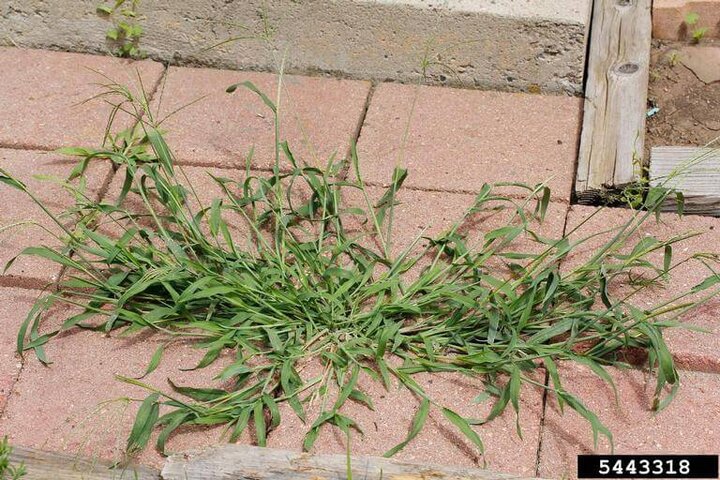
Crabgrass, a summer annual, begins germination when soil temperatures reach 55 degrees F. at two to four inch depth for a few consecutive days. Apply crabgrass pre-emergent herbicides when soil temperatures reach that for a week-long average. Visit UNL CropWatch Soil Temp Update to check the soil temperature in your area to know when to apply herbicides for your clientele.
Henbit is another weed we see in the spring. The purple blooms of henbit are coloring fields and home landscapes. This is one of our most prominent winter annuals, meaning this plant germinated last fall and overwintered to grow aggressively early this spring, blooming now. They die with hot, dry weather in mid to late June, but seed production can be high in spring and is one reason infestations worsen each year. Control of winter annual weeds with post emergent herbicides at this time of year is not very effective. Plants will die soon on their own. The best option at this time is to hand pull if feasible to allow turfgrass to fill in areas and minimize seed production. If winter annual infestations are unacceptable, apply a preemergent herbicide in late summer to early fall. Other management options include maintaining a vigorously growing lawn to compete with annuals; or using a 2 to 3-inch layer of mulch in landscape beds to reduce seed germination.
Dandelions are also popping up in lawns already. These are perennial weeds and are best controlled with broadleaf herbicides in the fall. Spraying in the spring isn't very effective and can lead to more problems with spray drift in warmer spring temperatures which can injure non-target plants.
8. Mitigating Wildfire Hazard
We have seen quite a bit of wildfire activity throughout the state recently. Nebraska has been at high risk for wildfires due to current weather conditions. One way to mitigate fire hazard is reducing “fuel” within 5 feet of a home’s foundation. For example, the dry, dead tops of ornamental grasses create fuel for a carelessly discarded cigarette or electrical short. They ignite easily, burn rapidly and flames can reach quite high. Cut or mow grasses low near a house, garage, outbuilding, deck, firewood pile, propane tank, shrub, and specimen trees with low-growing branches. Other things to avoid or remove when conditions for wildfire are high include:
- Climbing plants against buildings
- Branches within 10 feet of chimney
- Litter in roof gutters
- Combustibles items under decks or near homes
- Combustible containers, mulch (rubber mulch ignites the easiest and is most difficult to extinguish), fencing, furniture and firewood
For more information on mitigating wildfire hazards, visit the Weather-Ready Landscapes Page
Also, view this guide from the Nebraska Forest Service: Rural Homes and Wildfire
9. Desiccation of Evergreens
This winter was quite dry for most of the state. If you didn't water evergreens through the winter, desiccation may occur. Evergreens are effected most by winter desiccation because they are still transpiring through the winter. If transpiration exceeds the amount of moisture the roots can absorb, desiccation may occur. Conditions remain dry and time will tell how much dessication injury we will see on plants. When injury shows up, remind clients to wait to prune damaged plant tissue until about June 1. Waiting allows new growth to occur if buds are still viable. If no new growth occurs on evergreens by June 1, and the damage is severe enough the plant has to be pruned back beyond where there is green foliage, evergreens will not regenerate new growth from this point. It would be best to replace the plant.
10. Commercial/Non-commercial pesticide applicators
The 2026 initial training and recertification period began January 1, 2026. If you have a pesticide applicators license which expires in April 2026 or you need to get a new license, commercial/noncommercial applicators have several options to recertify or get a new license.
2026 Traditional Classroom Training
2026 Commercial/non-commercial training will be held January through April. Training schedules are available at https://pested.unl.edu/. Help your employees be successful at getting a license by purchasing study materials.
Testing-only Options
- Closed-book exams are given by the Nebraska Department of Agriculture (NDA). Preregistration is not required an there is no cost. Visit the link below for a list of available test-only dates, times and locations - https://pested.unl.edu/.
- NDA computer-based testing is provided through the Pearson-Vue company. Click here for a list of testing sites, categories available, dates, and registration information. Cost $55 per exam. (For applicators with multiple categories on their license, each category is charged the full testing fee.)
Commercial/noncommercial applicators are professionals who apply restricted-use pesticides for hire or compensation. Anyone who applies pesticides to the property of another person, either restricted- or general-use products, for control of pests in lawns, landscapes, buildings or homes must also have a commercial pesticide applicators license. Public employees (those employed by a town, county, state) applying mosquito control pesticides whether restricted- or general-use, must also hold a commercial or noncommercial certification.
11. Digital Diagnostic Network - Need help with diagnostics?
Do you or your clients have questions you need help answering? Maybe you are a lawn care person and they're asking about trees, shrubs, or flowers? While you can refer them to their local Extension office, another option is Digital Diagnostic Network. Homeowners, lawn care professionals, pest control operators and others are invited to submit questions and photos through this website or with the assistance from an Extension professional at any Nebraska Extension office. All offices are equipped with high-resolution digital image capturing technology. Whether the question is about a lawn weed, insects on a plant, diseases in a shrub border or other, an expert panel of Extension professionals will review and respond to the question. To get started, create an account so the question can be reviewed and responded to via email. For more information and to create an account, go to Digital Diagnostic Network.
Bugging Out With Your Camera Phone - Tips on how to get a good picture.
Reference to commercial products or trade names is made with the understanding that no discrimination is intended and no endorsement by Nebraska Extension is implied. Use of commercial and trade names does not imply approval or constitute endorsement by Nebraskas Extension. Nor does it imply discrimination against other similar products.
Continuing Issues
Fruits & Vegetables
Trees & Shrubs
- Emerald Ash Borer Resources - EAB has been found in several Nebraska locations. Homeowners are encouraged to wait to begin treating their ash trees until the insect is confirmed within 15 miles of their location.
- NFS Tree Storm Damage Resources