Content
Seasonal information for Nebraska's green industry professionals.
Going In-depth
1. Pruning Shrubs in Winter - Winter can be a good time to prune some shrubs.
2. February 25th growing degree days (GDD) - Several Nebraska sites below, Understanding Growing Degree Days
3. Pest update - Pests to watch for based on growing degree days (GDD)
Research You Can Use
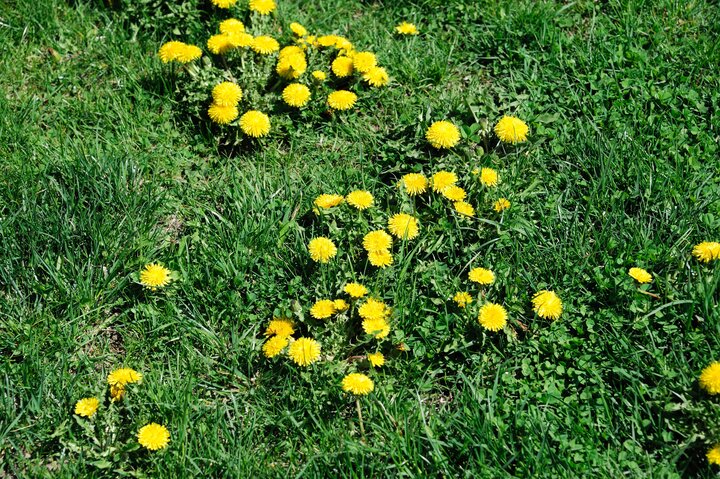
4. Tips to Maximize Control of Dandelions and Other Perennial Broadleaf Weeds, UNL Turfgrass Science
Greener Landscapes - Conservation & Climate Change Mitigation in Action
5. Spring Garden Cleanup and Stem-Nesting Bees: When to Cut Perennial Stems
Timely Topics
6. Plan to treat Prostrate Knotweed
7. Start the Season with Well-Functioning Equipment
8. Plan Treatment Schedule with Clients
9. Prune Shade Trees
For Your Information
10. Commercial/Non-commercial pesticide applicator certification - Obtaining a new license or updating an expired license.
11. Digital Diagnostic Network - Need help with diagnostics? - Submit pictures and questions for diagnosis by Nebraska Extension experts.
ProHort Update Newsletter
ProHort Update is a FREE monthly e-mail newsletter from Nebraska Extension, providing timely information to green industry professionals.
SubscribeNebraska's drought status, 2/26/2026

ProHort Update Body 10/2024
Upcoming Events
1. Pruning Shrubs in Winter
Late winter is a good time to prune summer blooming shrubs, before they set their flower buds for the year. Those shrubs that bloom in the summer wait to set flower buds until the early spring. So late winter is a great time to get out and prune these shrubs for shape and size. Those shrubs that bloom in the summer include summer blooming spirea, potentilla, and smokebush.
If it is a shrub that blooms in the spring, do not prune it at this time. Shrubs that bloom in the spring set their flower buds the previous season. If you prune a spring blooming shrub now, you will be cutting off many of the flower buds. If it blooms in the spring, wait to prune these until after they bloom this spring. The recommendation is to prune spring blooming shrubs 2-3 weeks after blooming is completed in the spring.
Roses and butterfly bushes should not be pruned now either. These shrubs or suffrutescent plants, which is the type of growth found on butterfly bushes, should not be pruned until spring. They don’t bloom until summer, but bloom on new growth. These two plants have hollow stems which can get moisture into those stems through the winter which can freeze and thaw and crack the crown of the plant. This can lead to death in some cases. It is best to wait for new growth to start showing up in the spring before they are pruned, this is typically in mid to late April.
Shrubs grown primarily for the foliage should be pruned in the spring before growth begins. This includes burning bush, ninebark, sumac, purpleleaf sandcherry, and barberry.
Shrub Pruning Methods
When you prune a shrub, first remove any dead or dying branches or those that are infested by insects and diseases. It also helps to remove some of the branches to allow for better airflow to help reduce disease problems. Then, prune to control the shape and size of the shrub. It’s not a good idea to plant a shrub that gets 10 feet tall into an area that can only accommodate a shrub up to 3 feet tall, but you can prune some to reduce the height, width, and overall shape of the plant.
There are a few common ways to prune a shrub. Heading back, thinning, shearing and rejuvenation.
Heading back pruning is to selectively cut back tall branches to redevelop a natural shape. With this method, cut back to a branch that is at least 1/3 the diameter of the branch being removed.
Thinning is annually removing 1/3 of the oldest, woodiest stems at the base of the plant. This maintains the young, productive growth of new stems from the crown and removes the older, less productive stems of the plant. This will help maintain continual flowering throughout the shrub and avoids times when a shrub, like a lilac, blooms only at the top of the plant.
Shearing is commonly used on evergreen shrubs to maintain size and shape of the evergreens. In many cases shearing leads to a dead center. Correct shearing is when the top of the plant is narrower than the bottom of the plant. If shearing is done with a wider top than the bottom, the bottom of the plant will not receive enough sunlight and will lead to sparse growth at the bottom. If wider at the bottom of the plant, the entire plant will receive sunlight and will grow better.
Rejuvenation, or renovation, pruning is used on overgrown or leggy shrubs. The entire shrub is cut back to the ground to rid the plant of older, non-vigorous stems. Rejuvenation pruning should be done while the plant is dormant in late winter to limit desiccation over winter. While thinning on a regular basis helps preserve the shrubs natural form and is preferred over rejuvenation, most multi-stemmed shrubs tolerate rejuvenation pruning. Evergreen shrubs will not tolerate rejuvenation pruning.
2. February 25th growing degree days (GDD)
| Location | Accumulated Growing Degree Days |
| Grand Island, NE - Airport | 17 |
| Lincoln, NE - Airport | 9 |
| Omaha, NE - Airport | 10 |
| Norfolk, NE - Airport | 9 |
| North Platte, NE - Airport | 2 |
| Scottsbluff, NE - Airport | 0 |
3. Pest Update
| GDD - Base 50 | Insect | Lifestage present at this GDD |
| 25-100 | Zimmerman pine moth | 1st larvae |
| 45-100 | Eastern tent caterpillar | Egg hatch |
| 150 | Eastern tent caterpillar | Tents apparent |
| 100-195 | European pine sawfly | 1st larve |
| 150-175 | Spruce spider mite | 1st egg hatch |
| 220-250 | Honeylocust spider mite | Egg hatch |
| 245-440 | American plum borer | Adult flight and egg laying |
| 250 | Codling moth | 1st generation control stage |
| 400-500 | Emerald ash borer (peak adult emergence at 1000-2000) | 1st adult emergence |
| 400-575 | Euonymous scale | 1st generation |
| 400-600 | Bronze birch borer | Adults, eggs, new larvae |
| 440-700 | Ash sawfly | 1st larvae appear |
| 600-900 | Bagworm | Larvae appear |
For a more complete list, visit Michigan State University GGD of Landscape Insects or GGD of Conifer Insects.
4. Tips to Maximize Control of Dandelions and Other Perennial Broadleaf Weeds, UNL Turfgrass Science
Dandelions and other broadleaf weeds will soon emerge and bloom throughout Nebraska. Fall is the optimum time for herbicides to control perennial broadleaf weeds, but there are other management practices that can be done to help reduce the population of these weeds throughout the spring and summer.
5. Spring Garden Cleanup and Stem-Nesting Bees: When to Cut Perennial Stems
Over the last several years, there’s been a big push to plant for pollinators. Homeowners are creating habitat in their landscapes—but many are unsure when (or how much) to clean up in spring.
When you cut back perennials can make the difference between supporting stem-nesting bees and accidentally removing potential nesting sites. Should you leave stems standing? Cut everything to the ground? And if you do cut, when is it safest?
Many resources suggest waiting until late spring. Researchers with NC State Extension noticed that recommendation didn’t have much hard evidence behind it—so they investigated by sampling roughly 3,000 stems from pollinator plantings across multiple gardens and seasons.
Their key finding: intact “first-winter” stems—stems that grew during the season and enter winter uncut and unopened—are generally not used by stem-nesting bees during that first winter. The reason is simple: bees typically need an opening into a hollow or pithy stem, and intact stems don’t provide easy access.
Where it gets interesting is what happens next. Stems that remain standing and weather through winter often become better nesting sites the following growing season, especially once natural wear, breakage, or deadheading creates entry points. In other words, leaving stems standing isn’t just “doing nothing”—it can set the stage for future nesting.
Practical guidance for a bee-friendly cleanup
- If stems were cut, snapped, or deadheaded during the growing season, treat them as potentially occupied. Those openings may already be inviting to bees, so it’s best to leave those stems standing and avoid cutting them again during winter or early spring.
- For intact first-winter stems, the ideal trimming window is winter (after the first hard frost and before the last spring frost). At that point, you can:
- Cut to the ground if you want a cleaner look, or
- Trim to 12–24 inches to keep things tidy and create ready-made nesting sites.
- Each year, focus your cutting on the previous season’s intact growth and leave older, already-weathered stems in place when possible—those are more likely to contain nests.
You can’t always tell if a stem has been used, but the cut end can offer clues. An intact pithy center often suggests it hasn’t been occupied, while a small hole (sometimes with a bit of pollen dust) can signal possible nesting. When in doubt, leave it.
Finally, for anyone worried about getting stung: most stem-nesting bees are solitary and generally not aggressive—they’re unlikely to sting unless handled roughly.
When it comes to spring cleanup, it helps to think like a bee. A little restraint—and a strategic trim—can keep your garden looking cared for while also making it a better place for pollinators to live and reproduce.
Youngsteadt, E., Levenson, H., Rose, L., & Glen, C. (2025, April). Garden cleanup for pollinators: Trim perennial stems in their first winter (AG-984). NC State Extension, North Carolina State University.
6. Plan to Treat Prostrate Knotweed
Plan to treat turf areas that are historically infested with prostrate knotweed with a preemergence herbicide, or apply a post emergence product to very small and newly germinated knotweed plants. The timing varies from year to year, but is much earlier than traditional applications for warm season annual weeds such as crabgrass and prostrate spurge; usually early to mid-March. Close inspection is the key to success.
7. Start the Season with Well-Functioning Equipment
Inspect, clean and replace worn parts of sprayers and fertilizer spreaders. Starting the season with well-functioning equipment is well worth the time and effort.
8. Plan Treatment Schedule with Clients
Outline a treatment schedule for your clients. List out your plan for various treatments to trees, shrubs and turf and include information on the target pest, approximate date(s) of application and product to be applied.
9. Prune Shade Trees
Mid to late March and April is an optimal time to prune shade trees to limit desiccation and remove broken, crossing and diseased branches.
10. Commercial/Non-commercial pesticide applicators
The 2026 initial training and recertification period began January 1, 2026. If you have a pesticide applicators license which expires in April 2026 or you need to get a new license, commercial/noncommercial applicators have several options to recertify or get a new license.
2026 Traditional Classroom Training
2026 Commercial/non-commercial training will be held January through April. Training schedules are available at https://pested.unl.edu/. Help your employees be successful at getting a license by purchasing study materials.
Testing-only Options
- Closed-book exams are given by the Nebraska Department of Agriculture (NDA). Preregistration is not required an there is no cost. Visit the link below for a list of available test-only dates, times and locations - https://pested.unl.edu/.
- NDA computer-based testing is provided through the Pearson-Vue company. Click here for a list of testing sites, categories available, dates, and registration information. Cost $55 per exam. (For applicators with multiple categories on their license, each category is charged the full testing fee.)
Commercial/noncommercial applicators are professionals who apply restricted-use pesticides for hire or compensation. Anyone who applies pesticides to the property of another person, either restricted- or general-use products, for control of pests in lawns, landscapes, buildings or homes must also have a commercial pesticide applicators license. Public employees (those employed by a town, county, state) applying mosquito control pesticides whether restricted- or general-use, must also hold a commercial or noncommercial certification.
11. Digital Diagnostic Network - Need help with diagnostics?
Do you or your clients have questions you need help answering? Maybe you are a lawn care person and they're asking about trees, shrubs, or flowers? While you can refer them to their local Extension office, another option is Digital Diagnostic Network. Homeowners, lawn care professionals, pest control operators and others are invited to submit questions and photos through this website or with the assistance from an Extension professional at any Nebraska Extension office. All offices are equipped with high-resolution digital image capturing technology. Whether the question is about a lawn weed, insects on a plant, diseases in a shrub border or other, an expert panel of Extension professionals will review and respond to the question. To get started, create an account so the question can be reviewed and responded to via email. For more information and to create an account, go to Digital Diagnostic Network.
Bugging Out With Your Camera Phone - Tips on how to get a good picture.
Reference to commercial products or trade names is made with the understanding that no discrimination is intended and no endorsement by Nebraska Extension is implied. Use of commercial and trade names does not imply approval or constitute endorsement by Nebraskas Extension. Nor does it imply discrimination against other similar products.
Continuing Issues
Fruits & Vegetables
Trees & Shrubs
- Emerald Ash Borer Resources - EAB has been found in several Nebraska locations. Homeowners are encouraged to wait to begin treating their ash trees until the insect is confirmed within 15 miles of their location.
- NFS Tree Storm Damage Resources