Content
Seasonal information for Nebraska's green industry professionals.
Going In-depth
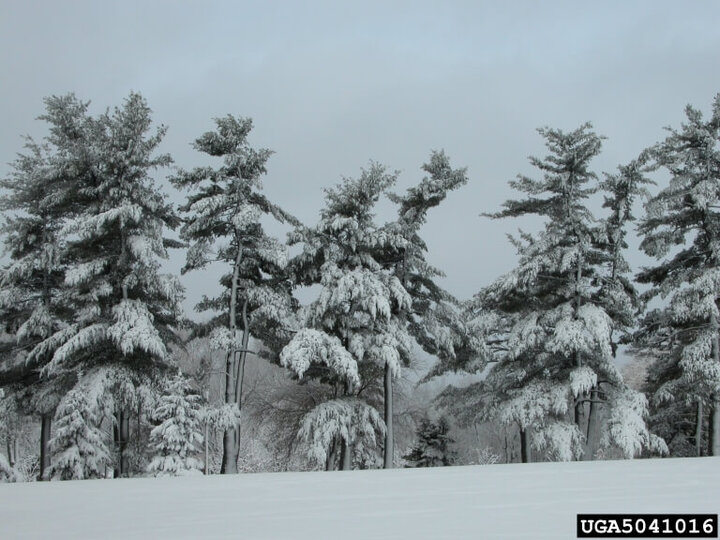
1. Dealing with Snow and Ice Damage in the Landscape - Make the proper corrective actions following winter storms and be proactive in tree and shrub management to deal with snow and ice before it damages the tree.
2. December 29th growing degree days (GDD) - Several Nebraska sites below, Understanding Growing Degree Days
3. Pest update - Based on growing degree day (GDD) markers, the pest control season is at an end. Watch for the return of GDD pest target timing in March 2026.
Research You Can Use
4. Grass Seed Shelf Life and Storage, SportsField Management
Greener Landscapes - Conservation & Climate Change Mitigation in Action
5. Native Woodies for the Winter Landscape
Timely Topics
6. Be Careful with Wood Ash as a Soil Amendment
7. Effects of Freezing or Wetness on Stored Pesticides
8. ProHort Lawn & Landscape Update Programs start in February
For Your Information
9. Commercial/Non-commercial pesticide applicator certification - Obtaining a new license or updating an expired license.
10. Digital Diagnostic Network - Need help with diagnostics? - Submit pictures and questions for diagnosis by Nebraska Extension experts.
ProHort Update Newsletter
ProHort Update is a FREE monthly e-mail newsletter from Nebraska Extension, providing timely information to green industry professionals.
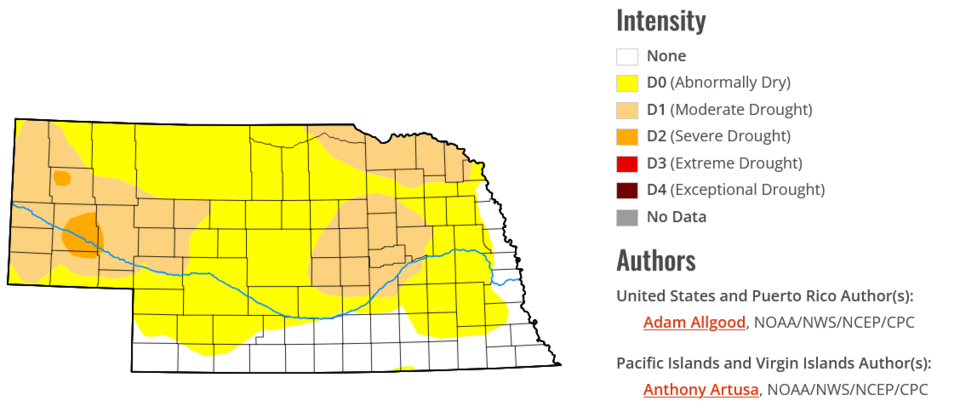
SubscribeNebraska's drought status, 12/24/2025
ProHort Update Body 10/2024
Upcoming Events
1. Dealing with Snow and Ice in the Landscape
When snow or ice gathers on branches, stems, and crowns it can harm or kill plants. The amount of ice or heavy snow, the temperature, and the wind all play a role in the extent of the damage, but there are ways to correct and prevent damage.
Corrective Actions
When snow or ice forms on trees or shrubs it can cause branches to bend and sometimes break, but there are actions to take to reduce injury to the plant and to your client.
- Remind clients to allow ice to melt off the plant naturally, it can break or crack branches.
- Do not stand under trees that are covered with ice, falling ice could be a hazard.
- Once the ice has melted and it is safe to be under the tree again, make corrective pruning cuts of broken branches. Remove trees that have been uprooted, have trunk failure, or more than 50% of branches are broken.
- Avoid foot or vehicle traffic across ice covered turf which can cause ice crystals on plants to fracture and damage plant tissue resulting in footprints, pathways or tire tracks across the turf that do not recover until late spring. Remind clients to take different paths when they walk across frozen turf.
Deicers
Deicing salts melt ice and give people and vehicles traction, but they can be harmful to plants when piled around them. Sodium found in deicing salts can damage soil making it difficult for roots to absorb water or cause a crust to form on the soil surface preventing water from infiltrating soil. This can cause desiccation or drying out of the plant material, yellow or brown spots, stunted growth, dead patches in the lawn, branch dieback, or leaf tip burn. Plant damage from deicers doesn’t show up until spring when plants that were injured by deicing salts do not green up correctly.
When using deicers, try products that are less harmful to plants. Sodium chloride is frequently used. This product is inexpensive and easy to find, but quite harmful to plants. Products such as calcium chloride or calcium magnesium acetate are less harmful to plants. Apply a light layer of deicing salts in combination with gravel to get traction while using less deicing salt. Also, avoid piling snow in the same location each time to reduce the amount of sodium found around individual plants.
Plant Care After Ice
Maintain good irrigation when rainfall is not present. Keep soils around the plant evenly moist, not soggy and not dry. Water trees monthly during the winter when snowfall isn’t present. Irrigate using a sprinkler or hose on slow trickle in the drip zone of the tree to water to 12-18 inches deep for trees and 8-12 inches for shrubs. Test for soil moisture with a screwdriver prior to watering to determine if watering is needed. If the screwdriver goes into the soil easily, watering is not necessary. However, if pushing the screwdriver into the soil is very difficult or dry when it is removed, plants should be watered. Always remember to unhook hoses from the house after irrigation in winter months.
Maintain organic mulch around all trees and shrubs to reduce weed competition, moderate soil temperatures, and maintain moisture levels. Mulch should be a uniform 2-3 inches in depth throughout, do not mound mulches around the base of the plant.
Avoid fertilizing plants injured from snow and ice damage until the plant recovers. Fertilizers can push plant growth and burn plant roots which can cause more stress after snow or ice injury. Be sure to keep a buffer area around damaged plants when fertilizing the lawn to avoid further stress to the plant.
Preventative Actions
It is better to prevent tree injury before snow or ice damage occurs by maintaining correctly pruned trees. Always follow recommended pruning practices from the University of Nebraska, Nebraska Arborists Association, and the International Society of Arboriculture.
- Prune trees correctly when young to develop strong branching patterns and to avoid decay from removing large branches.
- Avoid topping, rounding off or pollarding pruning on trees which can result in weakly attached sucker branches that break easily in storms.
- Correctly remove dead, damaged, or diseased branches.
- Do not allow codominant trunks to develop which break easily with heavy snow and ice load.
- Select trees with dense wood and strong branch angles that are less susceptible to breakage.
- When staking trees, stake loosely, avoid staking trees too high on the trunk, and remove staking materials after one year.
- Monitor trees for signs of decay or other injury, look for fungal growth on bark, discolored wood, and large wounds.
Think ahead and maintain properly planted and pruned trees and shrubs for your clients to avoid damage from ice and snow.
2. December 29th growing degree days (GDD)
| Location | Accumulated Growing Degree Days |
| Grand Island, NE - Airport | 3723 |
| Lincoln, NE - Airport | 3970 |
| Omaha, NE - Airport | 4048 |
| Norfolk, NE - Airport | 3454 |
| North Platte, NE - Airport | 3208 |
| Scottsbluff, NE - Airport | 3171 |
4. Grass Seed Shelf Life and Storage, SportsField Management
As you move forward from the 2025 growing season to the 2026 season, you may have some leftover supplies. Are those supplies still going to work for your clientele after sitting for the winter? One of those supplies you may have left over is grass seed. Does grass seed go bad? Yes, but there are ways to test the viability of your grass seed to know if it is a good product to use for your clientele next year. Read this article for more information on testing grass seed viability, storage, and how to use up bad grass seed.
5. Native Woodies for the Winter Landscape
Shrubs can do a lot for the landscape by providing size and texture in between trees, herbaceous perennials and annuals, and turf. They tend to have extensive root systems that help with soil infiltration and the general soil ecosystem. They are also stars when it comes to keeping an attractive and lively winter landscape even when you wouldn't want to be outside in a parka.
Native shrubs can benefit wildlife in the winter by providing both habitat and food. Especially if you have the space or ability to recommend a thicket-forming woody shrub, birds and bunnies have an opportunity to make homes where they are relatively protected from predators. Large shrubs can function the same for birds or squirrels. Is your client looking for something short? Coralberry and snowberry (Symphiocarpos spp.) reach 3-4 feet before weeping over and rooting out. Beautiful pinkish-red or white berries persist until wildlife take them away. 'Gro-Low' fragrant sumac (Rhus aromatica 'Gro-Low') is a strong filler, but provide low and interesting growth for winter interest, especially if berry clusters persist far into the cold months. For in-season pop but structural winter interest, sweetspire (Itea virginica) is stunning during the growing season but suckers to form a good cluster of branches for birds to hang out. Larger shrubs like viburnums are striking while in bloom, but can be loaded with berries and birbs (yes, that's a technical term!) throughout winter.
Berry-producing woodies such as Chokeberry (Aronia spp.), elderberry (Sambucus canadensis), and basically all dogwoods (Cornus spp.) have a wide range of sizes, looks and growth forms to fit almost any landscape which can attract wildlife throughout winter with dried berries and dense branching to hang out on.
More and more nurseries have native or native-related shrubbery to offer, and you can find Nebraska-based growers who are focused on production of hardy, native stock to satisfy all customers.
6. Be Careful with Wood Ash as a Soil Amendment
Warn clients that wood ash can raise the pH of gardens and facilitate chlorosis. Though it’s a tender notion to recycle or reuse ash from fireplaces or fire pits, our soils in both eastern and (especially) western Nebraska are usually alkaline and adding a lime source such as wood ash only makes it worse.
Using Wood Ash in the Home Garden from the University of Wisconsin
Using Wood Ashes in the Home Garden from Iowa State University Extension and Outreach
7. Effects of Freezing or Wetness on Stored Pesticides
Store pesticides correctly and securely. Storage information can be found on pesticide labels. Read and follow it for safety and to help keep pesticides from degrading so they may no longer be as effective.
In general, pesticides need to be stored in a secure, well ventilated location that can be locked. The location should be away from children, pets and food items as well as anything that might be contaminated in case of a leak or accidental spill.
Do not store pesticides near heat, sparks, or open flames; and check that containers are tightly closed. Always store pesticides in their original containers. A mistake made is pouring a pesticide into a container other than the original. This is against pesticide label law and has led to accidental poisonings.
A common question about winter storage is if a pesticide is still effective after it freezes. Most pesticides are safely stored between 40 and 100 degrees Fahrenheit, but it is best to check the label for storage temperature requirements and any warnings against freezing. If a liquid pesticide does freeze, it might be less effective in controlling pests.
Pesticides contain active and inactive ingredients. The active ingredient is what kills the pest. Inactive ingredients include solvents, carriers, or emulsifiers that make the pesticide more efficient. Due to some inactive ingredients, the freezing point of some liquid pesticides could be lower than 32 degree F. Read the label for temperature storage requirements and what to do if a pesticide does freeze.
Pesticides formulated as wettable powders or granules are not affected by low temperatures. However, moisture can cause caking that may reduce effectiveness so follow label directions for correct storage recommendations.
If you have products formulated in water-soluble packets, these should not be frozen as they tend to become brittle and then break open.
Safe Transport, Storage, and Disposal of Pesticides, Nebraska Extension
8. ProHort Lawn & Landscape Update Programs start in February
The 2026 ProHort Lawn & Landscape Update programs will begin in February to be held throughout the state. These are the annual workshops for nursery & green industry professionals, public works employees, landscape managers, arborists, tree board volunteers and cemetery & grounds keepers. This year's sessions focus on tree and turf interactions & stressors, pollinators, containers, and soils. For dates or more information or to register, visit the ProHort Lawn & Landscape Update page
9. Commercial/Non-commercial pesticide applicators
The 2026 initial training and recertification period begins January 1, 2026. If you have a pesticide applicators license which expires in April 2026 or you need to get a new license, commercial/noncommercial applicators have several options to recertify or get a new license.
2026 Traditional Classroom Training
2026 Commercial/non-commercial training will be held January through April. Training schedules are available at https://pested.unl.edu/. Help your employees be successful at getting a license by purchasing study materials.
Testing-only Options
- Closed-book exams are given by the Nebraska Department of Agriculture (NDA). Preregistration is not required an there is no cost. Visit the link below for a list of available test-only dates, times and locations - https://pested.unl.edu/.
- NDA computer-based testing is provided through the Pearson-Vue company. Click here for a list of testing sites, categories available, dates, and registration information. Cost $55 per exam. (For applicators with multiple categories on their license, each category is charged the full testing fee.)
Commercial/noncommercial applicators are professionals who apply restricted-use pesticides for hire or compensation. Anyone who applies pesticides to the property of another person, either restricted- or general-use products, for control of pests in lawns, landscapes, buildings or homes must also have a commercial pesticide applicators license. Public employees (those employed by a town, county, state) applying mosquito control pesticides whether restricted- or general-use, must also hold a commercial or noncommercial certification.
10. Digital Diagnostic Network - Need help with diagnostics?
Do you or your clients have questions you need help answering? Maybe you are a lawn care person and they're asking about trees, shrubs, or flowers? While you can refer them to their local Extension office, another option is Digital Diagnostic Network. Homeowners, lawn care professionals, pest control operators and others are invited to submit questions and photos through this website or with the assistance from an Extension professional at any Nebraska Extension office. All offices are equipped with high-resolution digital image capturing technology. Whether the question is about a lawn weed, insects on a plant, diseases in a shrub border or other, an expert panel of Extension professionals will review and respond to the question. To get started, create an account so the question can be reviewed and responded to via email. For more information and to create an account, go to Digital Diagnostic Network.
Bugging Out With Your Camera Phone - Tips on how to get a good picture.
Reference to commercial products or trade names is made with the understanding that no discrimination is intended and no endorsement by Nebraska Extension is implied. Use of commercial and trade names does not imply approval or constitute endorsement by Nebraskas Extension. Nor does it imply discrimination against other similar products.
Continuing Issues
Fruits & Vegetables
Trees & Shrubs
- Emerald Ash Borer Resources - EAB has been found in several Nebraska locations. Homeowners are encouraged to wait to begin treating their ash trees until the insect is confirmed within 15 miles of their location.
- NFS Tree Storm Damage Resources